



Entdecken Sie den Sinks Canyon State Park
Nur sechs Meilen südwestlich von Lander gelegen, bietet der Sinks Canyon State Park Wandermöglichkeiten, Angeln, Wildtierbeobachtungen und eine beeindruckende Canyonlandschaft – und das alles nur eine kurze Autofahrt von der Stadt entfernt. Der Middle Fork des Popo Agie River schlängelt sich durch den Canyon, umgeben von Kalksteinfelsen und bewaldeten Hängen, sodass sich das Gebiet problemlos in jede Reiseroute durch das Wind River Country integrieren lässt.
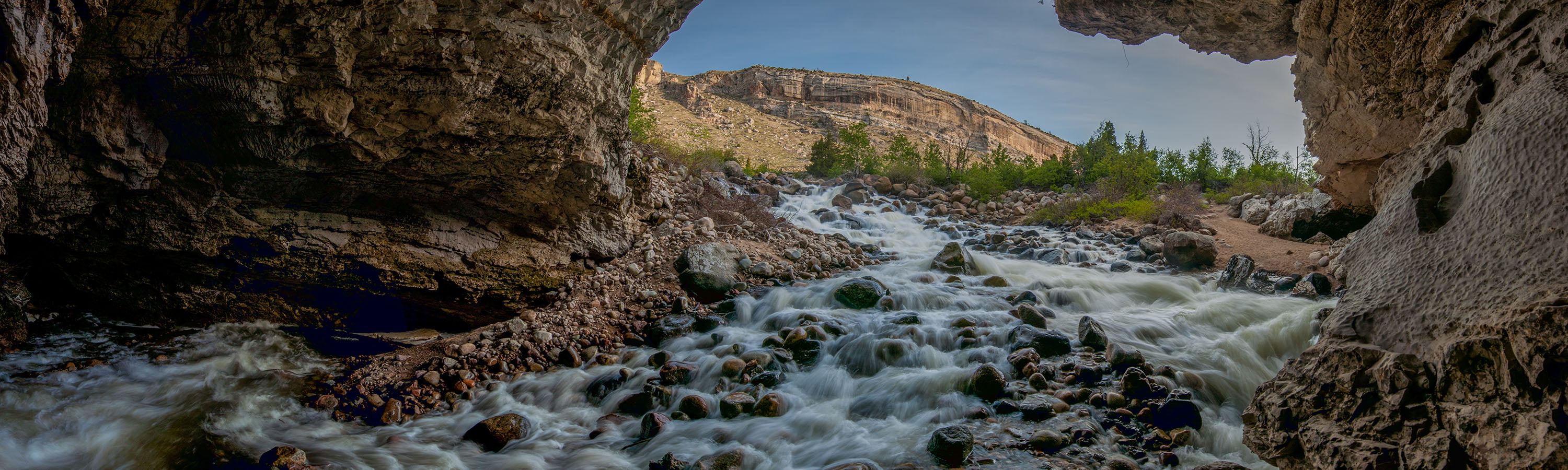
Die Schlucht ist vor allem für die ungewöhnliche geologische Besonderheit bekannt, die ihr ihren Namen gibt. An “The Sinks” verschwindet der Middle Fork des Popo Agie River unterirdisch in einer Kalksteinhöhle. Etwa eine Viertelmeile weiter den Canyon hinunter tritt das Wasser an “The Rise” wieder zutage. Obwohl die Verbindung zwischen den Sinks und dem Rise bestätigt wurde, bleibt der unterirdische Verlauf des Flusses ein faszinierender Teil dieser einzigartigen Naturattraktion.
Die „Sinks“ und der Anstieg im Sinks Canyon State Park
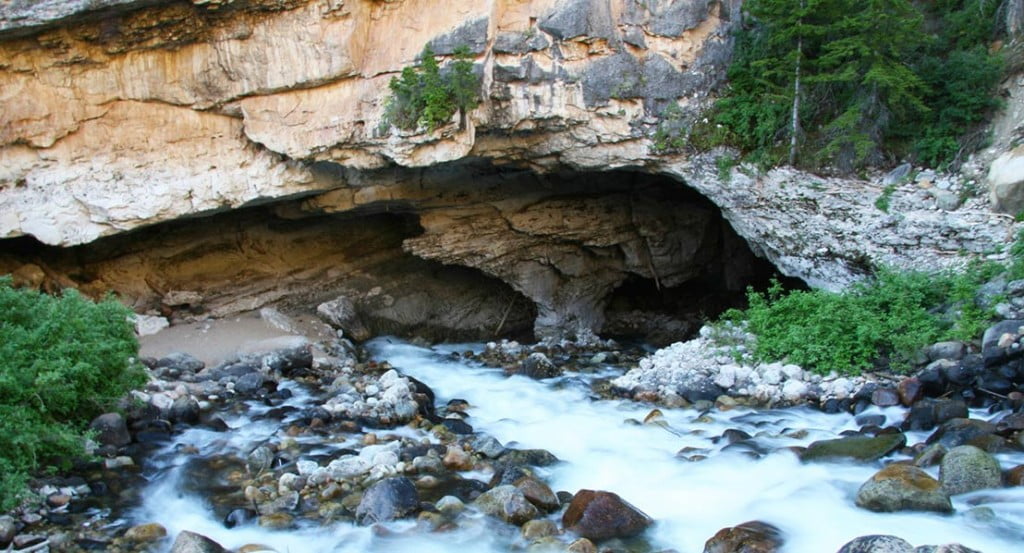
Die „Sinks“ und der „Rise“ sind Sehenswürdigkeiten im Sinks Canyon State Park, die man sich nicht entgehen lassen sollte. Beginnen Sie bei den „Sinks“, wo Sie von den Aussichtsplattformen aus aus nächster Nähe beobachten können, wie der Middle Fork des Popo Agie River in der Kalksteinhöhle verschwindet. Informationsschilder erläutern die Geologie des Canyons und den ungewöhnlichen unterirdischen Weg des Wassers.
Folgen Sie dem Canyon weiter bis zum „Rise“, wo das Wasser in einem großen Becken wieder an die Oberfläche tritt, bevor es weiter flussabwärts fließt. Vom Aussichtspunkt aus können Sie das Wasser beobachten – und die großen Forellen, die sich in dem Becken versammeln. Zusammen bieten diese beiden Stationen eine einfache Möglichkeit, das Naturphänomen zu erleben, das den Sinks Canyon berühmt gemacht hat.
Wo der Sinks Canyon River verschwindet
Von einem Aussichtsbereich an den „Sinks“ aus können Besucher die Kalksteinhöhle, in der der Fluss unterirdisch verschwindet, aus nächster Nähe betrachten. Da sich der Wasserstand im Laufe des Jahres verändert, kann das Erlebnis je nach Jahreszeit ganz unterschiedlich aussehen und klingen.
Wer einen noch genaueren Einblick gewinnen möchte, für den bietet der Sinks Canyon State Park saisonal geführte Höhlentouren an, in der Regel von September bis April, sofern der Wasserstand den Zugang zulässt. Diese Touren bieten die Gelegenheit, die Höhle zu erkunden und mehr über die Geologie und Hydrologie der Sinks zu erfahren. Informieren Sie sich vor Ihrem Besuch beim Sinks Canyon State Park über aktuelle Tourtermine, Verfügbarkeit und Teilnahmebedingungen.
Das Geheimnis der Reise unter der Erde
Was mit dem Fluss zwischen den „Sinks“ und dem „Rise“ geschieht, bleibt eine der faszinierendsten Fragen des Canyons. Farbstoffversuche haben bestätigt, dass Wasser, das in die „Sinks“ eintritt, schließlich den „Rise“ erreicht, doch sein unterirdischer Verlauf ist noch nicht vollständig geklärt. Obwohl die beiden Stellen nur etwa eine Viertelmeile voneinander entfernt sind, benötigt der Farbstoff mehr als zwei Stunden, um zwischen ihnen zu wandern – viel länger als für eine so kurze Strecke zu erwarten wäre.
Das Rätsel wird noch größer, da Messungen ergeben haben, dass am „Rise“ mehr Wasser austritt, als in die „Sinks“ einfließt, was darauf hindeutet, dass sich dem Fluss irgendwo auf seinem unterirdischen Weg zusätzliches Grundwasser anschließt.
Der Fluss „The Rise“ und seine Forellen
Am „Rise“ tritt Wasser aus den Tiefen der Schlucht zutage und sammelt sich in einem großen Becken, bevor es weiter flussabwärts fließt. Das klare Wasser macht es leicht, die großen Forellen zu entdecken, die sich hier versammeln, und eine Aussichtsplattform ermöglicht den Besuchern einen Blick aus nächster Nähe.
Am „Rise“ ist das Angeln nicht gestattet, aber Besucher können die Fische vom Aussichtsbereich aus füttern. Fischfutter kann in der Nähe gekauft werden, was diesen Ort zu einem besonders beliebten Ausflugsziel für Familien macht.
Den Sinks Canyon in Wyoming kennenlernen
Jenseits der „Sinks“ und des „Rise“ bietet die Schlucht einen eindrucksvollen Einblick in die Geologie des südlichen Wind River-Gebirges. Urzeitlicher Kalkstein, Dolomit und Sandstein bilden die Schluchtwände, während Gletscherablagerungen am Schluchtboden von den Gletschern erzählen, die einst durch dieses Gebiet zogen. Der Middle Fork des Popo-Agie-Fluss prägt auch heute noch die Landschaft.
Der Sinks Canyon liegt südwestlich von Lander am Wyoming Highway 131 und ist mit dem Auto leicht zu erreichen. Er ist nah genug, um ihn im Rahmen eines kurzen Ausflugs zu erkunden oder als Ausgangspunkt für ein ganztägiges Outdoor-Abenteuer zu nutzen.
Lage und Anfahrt in der Nähe von Lander
Der Sinks Canyon State Park liegt etwa sechs Meilen südwestlich von Lander und ist mit dem Auto gut erreichbar. Von Lander aus folgen Sie dem Highway 131 in Richtung Süden, der in den Sinks Canyon mündet und sich entlang des Middle Fork des Popo Agie River schlängelt.
Die asphaltierte Straße führt über den State Park hinaus in den Shoshone National Forest und bietet Zugang zu weiteren Wanderwegausgangspunkten, Campingplätzen und Erholungsgebieten. Weiter in den Bergen trifft die Route auf die Loop Road, eine saisonal befahrbare Panoramastraße, die durch den südlichen Teil der Wind River Range führt und schließlich in das South-Pass-Gebiet mündet.
Das Besucherzentrum und der Naturlehrpfad
Das Besucherzentrum des Sinks Canyon ist ein lohnender erster Anlaufpunkt. Dort gibt es Ausstellungen zur Geologie, Tierwelt und Naturgeschichte des Canyons sowie Informationen, die Besuchern bei der Erkundung des Parks helfen. Von hier aus lassen sich die „Sinks“ bequem besichtigen und man kann die Straße weiter bis zum „Rise“ hinunterfahren.
Besucher können außerdem kurze Naturpfade in der Umgebung erkunden, um die Landschaft des Canyons aus nächster Nähe zu erleben. Informieren Sie sich vor Ihrem Besuch beim Sinks Canyon State Park über die aktuellen Öffnungszeiten des Besucherzentrums, das Programmangebot und den Zustand der Wanderwege.
Wanderwege im Sinks Canyon
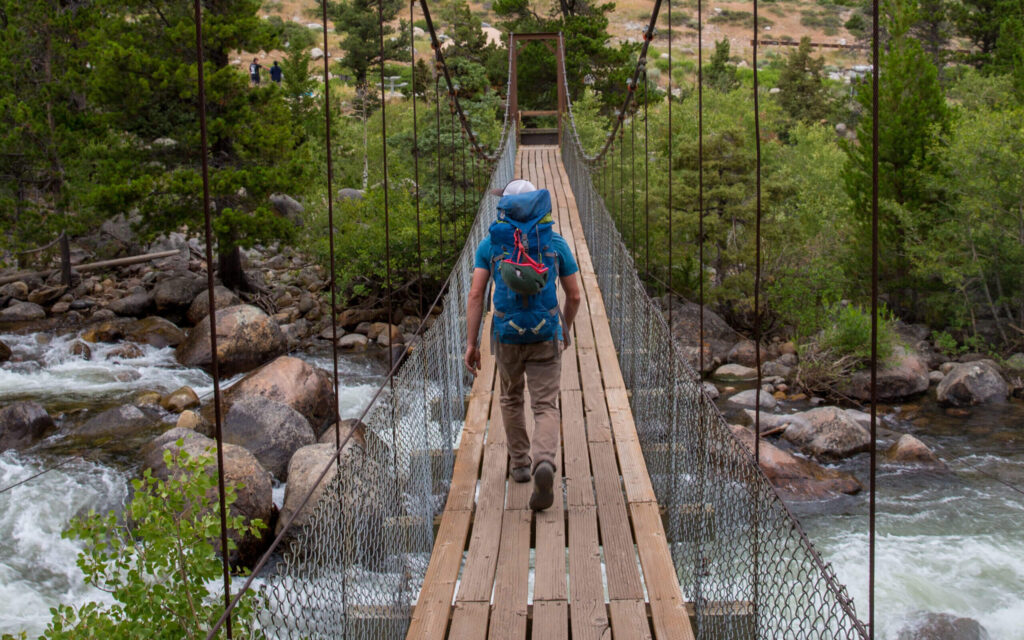
Die Wandermöglichkeiten im Sinks Canyon reichen von kurzen Spaziergängen innerhalb des Sinks Canyon State Park bis hin zu längeren Wanderwegen, die bis in den Shoshone National Forest und die Popo Agie Wilderness führen. Besucher können sich für eine leichte Wanderung entlang des Canyonbodens entscheiden oder tiefer in die Berge vordringen, um anspruchsvollere Tageswanderungen und Rucksacktouren zu unternehmen.
Da viele der Wanderwege in dieser Gegend über die Grenzen des State Parks hinausreichen, empfiehlt es sich, vor dem Aufbruch die Wegbedingungen, Karten und Informationen zur Landbewirtschaftung zu prüfen.
Beliebte Tageswanderungen und Streckenlängen
Für eine längere Wanderung ist der Popo Agie Falls Trail eine der beliebtesten Routen im Canyon. Der Weg beginnt am Parkplatz „Bruce’s“ im Shoshone National Forest, jenseits des State Parks, und führt etwa 1,5 Meilen entlang des Middle Fork des Popo Agie River zu einer Reihe von Kaskaden und Wasserfällen. Die rund drei Meilen lange Rundwanderung ist eine beliebte Wahl für Familien und Besucher, die ein paar Stunden damit verbringen möchten, den Canyon zu Fuß zu erkunden.
Der Sinks Canyon bietet zudem Zugang zu einem weitaus größeren Netz von Wanderwegen im Shoshone National Forest und in der Popo Agie Wilderness, wobei die Möglichkeiten von Tageswanderungen bis hin zu mehrtägigen Rucksacktouren reichen. Die Länge der Wanderwege, der Schwierigkeitsgrad und die saisonalen Bedingungen variieren, daher sollten Wanderer eine Route wählen, die ihrer Erfahrung entspricht, und sich vor dem Aufbruch über die aktuellen Bedingungen informieren.
Felsmalereien und die Kulturgeschichte des Canyons
Die Geschichte der menschlichen Besiedlung des Sinks Canyon reicht Tausende von Jahren zurück. Archäologische Funde belegen, dass Menschen bereits vor 9.000 Jahren in der Schlucht lagerten und diesen natürlichen Korridor durch die Berge zum Reisen, Jagen und Sammeln nutzten.
Die im Canyon gefundenen Felsmalereien stellen eine weitere Verbindung zu dieser langen Geschichte dar. Der Sinks Canyon State Park identifiziert die Felsmalereien als Werke der Vorfahren des Shoshone-Volkes und schützt diese kulturell bedeutsamen Stätten, indem er ihre Standorte geheim hält. Besucher werden gebeten, nicht nach den Felsmalereien zu suchen und dabei zu helfen, diese Orte für künftige Generationen zu bewahren.
Klettern, Camping und Jurten im Sinks Canyon
Der Sinks Canyon ist zudem ein beliebter Ausgangspunkt für Freizeitaktivitäten im Freien und bietet Möglichkeiten zum Klettern, Campen und Übernachten inmitten der Canyonlandschaft. Kletterer kommen wegen der Kalksteinwände und der gut erschlossenen Kletterrouten in die Gegend, während mehrere Campingmöglichkeiten innerhalb des Canyons einen bequemen Zugang zu Wanderwegen, Angelmöglichkeiten und anderen Outdoor-Aktivitäten bieten.
Für Besucher, die eine Alternative zwischen Zeltcamping und herkömmlichen Unterkünften suchen, bietet der Sinks Canyon State Park Jurten für einen einzigartigen Übernachtungsaufenthalt im Park an.
Klettern und wetterbezogene Überlegungen
Der Sinks Canyon ist ein bekanntes Kletterziel mit Kalkstein- und Dolomitwänden, die eine Vielzahl von erschlossenen Routen bieten. Die verschiedenen Bereiche des Canyons bieten Möglichkeiten für Kletterer aller Erfahrungsstufen, allerdings sollten sich Kletterer vor dem Aufbruch über die einzelnen Routen und die aktuellen Bedingungen informieren.
Die Bedingungen können je nach Jahreszeit, Wetter und Sonneneinstrahlung im gesamten Canyon erheblich variieren. Einige Felswände sind reichlich der Sonne ausgesetzt, während andere den größten Teil des Tages im Schatten liegen, was Kletterern zu verschiedenen Jahreszeiten vielfältige Möglichkeiten bietet. Wie bei jedem Ausflug in die Berge sollten Sie vor dem Klettern die Wettervorhersage und die aktuellen Bedingungen prüfen und auf Wetterumschwünge vorbereitet sein.
Campingplätze, Jurten und Unterkünfte
Für Besucher, die im Canyon übernachten möchten, bietet der Sinks Canyon State Park Campingmöglichkeiten auf den Campingplätzen „Sawmill“ und „Popo Agie“ mit Stellplätzen für Zelte und kleine Wohnmobile.
Für ein etwas anderes Übernachtungserlebnis bieten die Jurten auf dem Popo Agie Campground eine komfortable Alternative zum Zelten und können im Voraus reserviert werden. Weitere Campingmöglichkeiten gibt es weiter oben im Sinks Canyon im Shoshone National Forest, während das nahegelegene Lander Hotels, Ferienwohnungen und andere Unterkunftsmöglichkeiten bietet. Informieren Sie sich vor Ihrem Aufenthalt über die aktuelle Verfügbarkeit, saisonale Angebote und Reservierungsbedingungen.
Wasser, Tierwelt und der Nachthimmel
Der Middle Fork des Popo Agie River, die artenreiche Tierwelt und der dunkle Nachthimmel ergänzen die vielfältigen Möglichkeiten, den Sinks Canyon zu erleben. Besucher können tagsüber angeln oder Wildtiere beobachten und dann bis in den Abend hinein bleiben, um den Canyon zu genießen, wenn die Landschaft zur Ruhe kommt und die Sterne am Himmel erscheinen.
Angeln am Middle Fork des Popo Agie River
Der Middle Fork des Popo Agie River bietet in der malerischen Umgebung des Sinks Canyon Möglichkeiten zum Angeln auf Bach- und Regenbogenforellen. Angler finden Zugangsmöglichkeiten sowohl innerhalb als auch außerhalb des State Parks, und auf dem weiteren Verlauf des Flusses in Richtung Lander ergeben sich weitere Angelmöglichkeiten.
Das Angeln ist am „Rise“ und entlang des Flussabschnitts unmittelbar stromabwärts bis zur Brücke an der Sinks Canyon Road verboten; dort dürfen die großen Forellen lediglich beobachtet werden. An allen anderen Stellen sollten Angler einen gültigen Angelschein für Wyoming mit sich führen und sich vor dem Ausflügen über die aktuellen Vorschriften des Wyoming Game and Fish Department informieren.
Wasserfälle und Wasserrutschen
Weiter oben im Canyon führt der Popo Agie Falls Trail Wanderer entlang des Middle Fork des Popo Agie River in den Shoshone National Forest. Der Weg endet an einer Reihe von Kaskaden und Wasserfällen, die über große Granitformationen hinabstürzen, was ihn zu einer der beliebtesten Wanderrouten der Region macht.
Unterwegs können Wanderer die Aussicht auf die umliegende Schlucht genießen. In der Nähe der Wasserfälle bilden glatter Granit und rauschendes Wasser natürliche Rutschen, die manchmal als “Wasserrutschen” bezeichnet werden. Auch wenn sie einladend aussehen mögen, kann der Fluss schnell fließen, kalt und gefährlich sein, insbesondere bei Hochwasser. Besucher sollten daher Vorsicht walten lassen und das Betreten des Wassers vermeiden, wenn die Bedingungen unsicher sind.
Sternbeobachtung im ersten internationalen Dark-Sky-Park von Wyoming
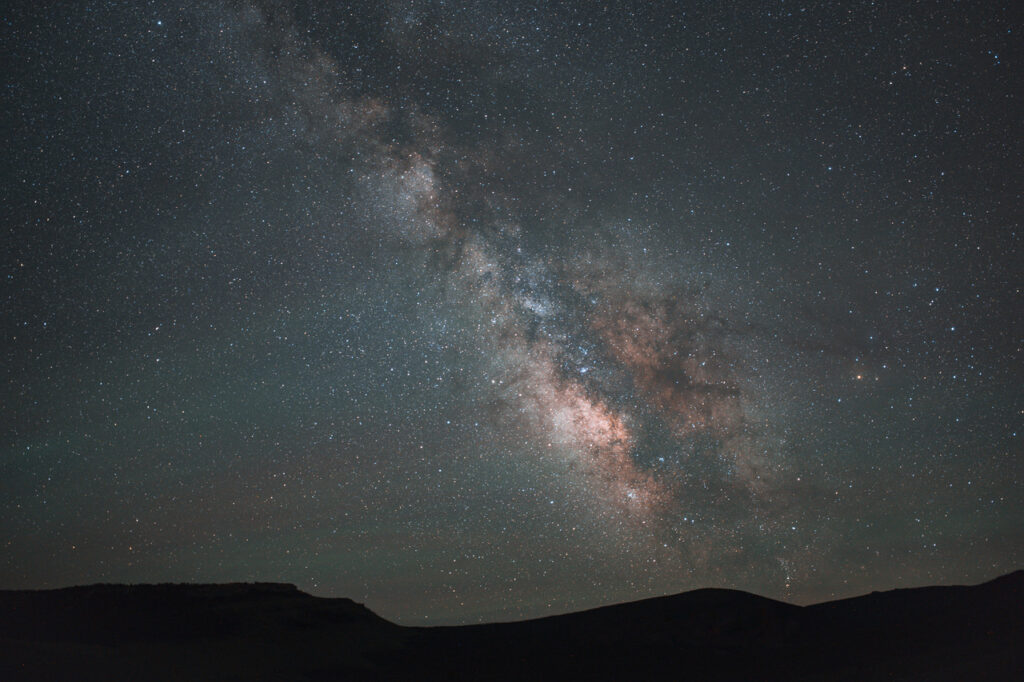
Im Jahr 2023, Der Sinks Canyon State Park wurde zum ersten „International Dark Sky Park“ in Wyoming ernannt, in Anerkennung der Qualität seines Nachthimmels und des Engagements des Parks für dessen Schutz. Umgeben von steilen Canyonwänden und Naturschutzgebieten bietet der Park hervorragende Möglichkeiten, den Nachthimmel fernab von übermäßiger künstlicher Beleuchtung zu erleben.
In klaren Nächten können Besucher nach Sternbildern, Planeten und der Milchstraße Ausschau halten, während die Parkprogramme die Möglichkeit bieten, mehr über Astronomie und die Bedeutung des Schutzes der natürlichen Dunkelheit zu erfahren. Für Camper und Abendbesucher ist das Erleben der Sterne eine unvergessliche Art, eine andere Seite des Sinks Canyon kennenzulernen.
Sehenswürdigkeiten in der Umgebung
Der Sinks Canyon lässt sich gut mit anderen Sehenswürdigkeiten und Erlebnissen rund um Lander und im südlichen Wind River Country kombinieren:
- Wind River Wild Horse Sanctuary – Das Schutzgebiet liegt nördlich von Lander im Wind River Indianerreservat und bietet geführte Touren an, bei denen man wilde Mustangs beobachten und mehr über die kulturelle Bedeutung von Pferden für die amerikanischen Ureinwohner erfahren kann.
- South Pass City State Historic Site – Entdecken Sie eine gut erhaltene Goldgräberstadt aus den 1860er Jahren mit historischen Gebäuden und Ausstellungen, die die Bergbaugeschichte von Wyoming zum Leben erwecken.
- Sacajawea-Friedhof – Der Friedhof liegt im Wind-River-Indianerreservat in der Nähe von Fort Washakie und beherbergt laut der mündlichen Überlieferung der Shoshone die Grabstätte von Sacajawea sowie die Gräber weiterer bedeutender Persönlichkeiten der Shoshone.
- Innenstadt Lander – Nachdem Sie den Canyon erkundet haben, kehren Sie nach Lander zurück, wo Sie Restaurants, Geschäfte, Brauereien und Galerien in lokalem Besitz sowie weitere Möglichkeiten finden, die Outdoor-Kultur der Gemeinde zu erleben.
Häufig gestellte Fragen
Was ist der Sinks Canyon in Wyoming? Der Sinks Canyon ist eine malerische Schlucht im südlichen Teil der Wind River Range, etwa sechs Meilen südwestlich von Lander gelegen. Der Sinks Canyon State Park schützt die bekanntesten geologischen Besonderheiten der Schlucht: die „Sinks“, wo der Middle Fork des Popo Agie River unterirdisch verschwindet, und den „Rise“, wo das Wasser weiter unten in der Schlucht wieder zum Vorschein kommt. Die Umgebung bietet zudem Möglichkeiten zum Wandern, Angeln, Klettern, Campen und für andere Freizeitaktivitäten im Freien im Sinks Canyon und im nahegelegenen Shoshone National Forest.
Wohin fließt das Wasser des Sinks Canyon? Der Middle Fork des Popo Agie River versickert bei den „Sinks“ in einer Kalksteinhöhle und tritt etwa eine Viertelmeile weiter den Canyon hinunter bei den „Rise“ wieder zutage. Farbstofftests haben bestätigt, dass die beiden Stellen miteinander verbunden sind, doch der genaue unterirdische Verlauf ist nach wie vor unbekannt. Das Wasser benötigt mehr als zwei Stunden, um zwischen den „Sinks“ und dem „Rise“ zu fließen, was auf einen wesentlich längeren unterirdischen Weg hindeutet als die kurze Entfernung an der Oberfläche zwischen den beiden Stellen.
Wie lang sind die Wanderwege im Sinks Canyon? Die Länge der Wanderwege hängt davon ab, wo Sie auf Entdeckungstour gehen möchten. Kurze Spaziergänge im Sinks Canyon State Park bieten eine einfache Möglichkeit, den Canyon zu erkunden, während der beliebte Popo Agie Falls Trail am Parkplatz „Bruce’s“ im Shoshone National Forest beginnt und eine Gesamtlänge von etwa drei Meilen (Hin- und Rückweg) hat. Längere Wanderwege führen weiter in den Shoshone National Forest und die Popo Agie Wilderness und bieten Möglichkeiten für ganztägige Wanderungen und mehrtägige Rucksacktouren.
Ganz gleich, ob Sie zum ersten Mal hier sind oder schon einmal hier waren – der Sinks Canyon bietet zahlreiche Gründe, mehr Zeit mit Erkundungen zu verbringen. Beobachten Sie, wie der Fluss an den „Sinks“ verschwindet, wandern Sie zu den Popo Agie Falls, werfen Sie Ihre Angel im Middle Fork des Popo Agie River aus oder bleiben Sie nach Sonnenuntergang noch etwas länger, um den Nachthimmel in Wyomings erstem „International Dark Sky Park“ zu erleben. Nur wenige Minuten von Lander entfernt gelegen, bietet der Sinks Canyon die ideale Gelegenheit, die Geologie, die Landschaft und die Freizeitmöglichkeiten in der Natur zu erleben, die das Wind River Country so einzigartig machen.