

Por la demanda de traviesas de ferrocarril de la Chicago & Northwestern Railroad, el Tie Drive comenzó en 1914 y duró hasta 1987 con el fin de la tala. Al principio del Tie Drive, el Wind River fue utilizado como un medio para transportar las traviesas desde arriba de Dubois hasta Riverton, donde las traviesas fueron arrastradas del río al patio de traviesas. Estas traviesas, durante el tiempo del transporte por río, vieron más de 70 millas de terreno accidentado y agua. Las traviesas bajaron por canales construidos a mano a través del cañón de Warm Springs, hacia las aguas turbulentas del Wind River, fluyendo sobre rocas, atascándose y siendo liberadas, luego derramándose a través de la Diversion Dam y terminando a lo largo de las orillas del Wind River cerca de Riverton.
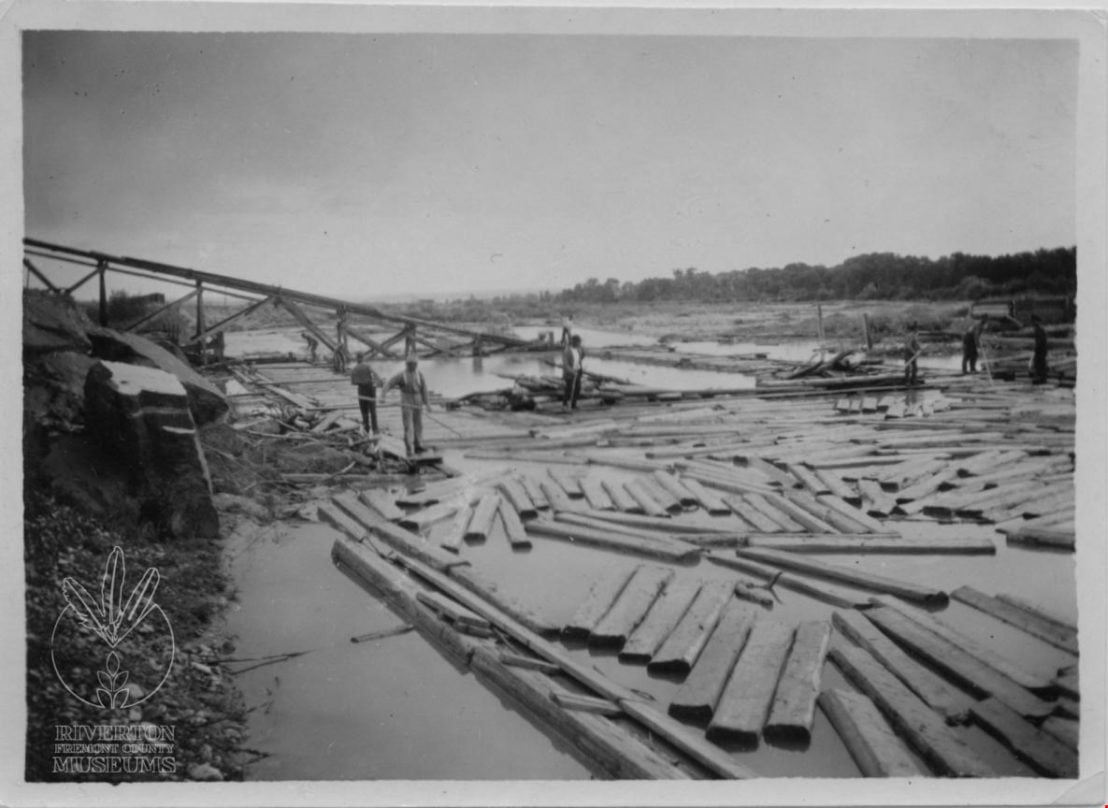
Para los hombres en Dubois, su trabajo era cortar y tallar la madera para darle forma y arrastrar estos troncos hasta el canal. Para los hombres de Riverton, les correspondía arrastrar las traviesas saturadas de agua a tierra firme y apilarlas en el patio de traviesas. El uso del río para transportar las traviesas terminó en 1947 después de que se introdujeron camiones. Esta comodidad moderna permitió a la empresa de traviesas transportar las traviesas continuamente en lugar de una vez al año. Con la llegada continua de traviesas, a los trabajadores se les pagaba mensualmente en lugar de anualmente.
Esta fotografía muestra traviesas que han sido atrapadas y dirigidas a una piscina, fuera del Wind River. Las traviesas se dirigen luego a la cinta transportadora ubicada en el fondo. Se ven hombres con picas de pico parados sobre traviesas, guiando las traviesas e impidiendo represas. Esta fotografía fue tomada mucho antes de 1947, antes de que las operaciones fluviales se cerraran a favor de camiones para el transporte.
Redescubre los Winds visitando el Dubois Museum, el Pioneer Museum en Lander o el Riverton Museum. Visita www.fremontcountymuseums.com para un cronograma completo de eventos, el último boletín informativo y el último Wind River Mountaineer.