



Explorando las cumbres alpinas y la majestuosidad de las montañas de Wyoming
Wyoming alberga algunos de los paisajes alpinos más espectaculares de América del Norte, y el pico Gannett se eleva por encima de todos ellos. Como la montaña más alta del estado, esta emblemática cumbre se eleva sobre los escarpados paisajes de la región de Wind River, inspirando a aventureros, escaladores y amantes de las actividades al aire libre de todo el mundo. Ya sea que estés planeando ascender a la cima, explorar la cordillera Wind River que la rodea o simplemente soñando con las espectaculares tierras altas de Wyoming, descubrir qué hace que el pico Gannett sea único es el primer paso hacia una aventura inolvidable.
Con una altura de 13,804 pies, el pico Gannett ofrece acceso a uno de los paisajes silvestres más extensos y espectaculares de las Montañas Rocosas. Rodeada de picos de granito, lagos alpinos, glaciares y millas de naturaleza virgen, la montaña más alta de Wyoming es más que una cima: es una invitación a experimentar la belleza salvaje y el espíritu perdurable de la región de Wind River.
Pico Gannett: la cima más alta de Wyoming
El pico Gannett es la montaña más alta de Wyoming y uno de los destinos naturales más famosos del estado. Se encuentra en la divisoria continental, en la Wind River Range, la cumbre marca el límite entre los bosques nacionales Shoshone y Bridger-Teton, así como entre las áreas silvestres Bridger y Fitzpatrick. Su ubicación remota, su terreno cubierto de glaciares y la ruta de aproximación de varios días la han convertido en uno de los principales objetivos de alpinismo del Oeste
El pico Gannett no es una escalada para principiantes. Llegar a la cima requiere una planificación cuidadosa, experiencia en zonas silvestres y sólidas habilidades de montañismo, lo que lo convierte en un objetivo gratificante para los excursionistas y escaladores experimentados que buscan una verdadera aventura en la naturaleza.
Comprender la importancia geográfica del pico Gannett
Elevándose muy por encima del límite forestal, el pico Gannett se adentra en terreno alpino, donde el clima cambiante, los campos de nieve y los glaciares dan forma al paisaje. Como la cumbre más alta de la cordillera Wind River, es el punto central de una de las áreas silvestres más espectaculares de las Montañas Rocosas, y ofrece a los visitantes una oportunidad única de disfrutar de extensas tierras públicas que permanecen prácticamente intactas frente al desarrollo moderno.
Llegar a la cima es una verdadera expedición. La mayoría de las rutas requieren una aproximación de varios días por terreno salvaje, con aproximadamente de 20 a 30 millas de caminata antes de que los escaladores comiencen el ascenso final.
¿Por qué visitar el pico Gannett?
- Un objetivo de alpinismo de primer nivel – La cima más alta de Wyoming pone a prueba a los escaladores experimentados con una ruta de varios días por zonas silvestres, travesías por glaciares y un terreno alpino inolvidable.
- Naturaleza salvaje y remota – En lo más profundo de la cordillera Wind River, el pico Gannett ofrece soledad, paisajes vírgenes y una de las experiencias en zonas silvestres designadas más extensas de las Montañas Rocosas.
- Paisajes alpinos inolvidables – El recorrido pasa por picos de granito, lagos alpinos, glaciares y panorámicas impresionantes de las montañas que hacen que la aventura sea tan memorable como la propia cima.
- Observación de la vida silvestre – La naturaleza salvaje de los alrededores es el hábitat de borregos cimarrones, marmotas, pikas, alces, ciervos mulos, osos negros y, en algunas zonas, osos grizzly.
- Una verdadera aventura en plena naturaleza – Al no haber caminos que conduzcan a la cima y tener que caminar varios días antes de comenzar el ascenso, el pico Gannett ofrece una auténtica experiencia en zonas remotas que pocos lugares del oeste de Estados Unidos pueden igualar.
Rutas del pico Gannett
Llegar al pico Gannett requiere una planificación cuidadosa, habilidades técnicas y una evaluación realista de tu experiencia. Existen varias rutas establecidas que conducen a la cima más alta de Wyoming, cada una con diferentes niveles de dificultad, terreno y exigencia. Dado que todas las rutas estándar implican recorrer zonas silvestres remotas y cruzar glaciares, los escaladores deben tener experiencia previa en montañismo o ir acompañados de un guía calificado.
La ruta Gould-Phipps
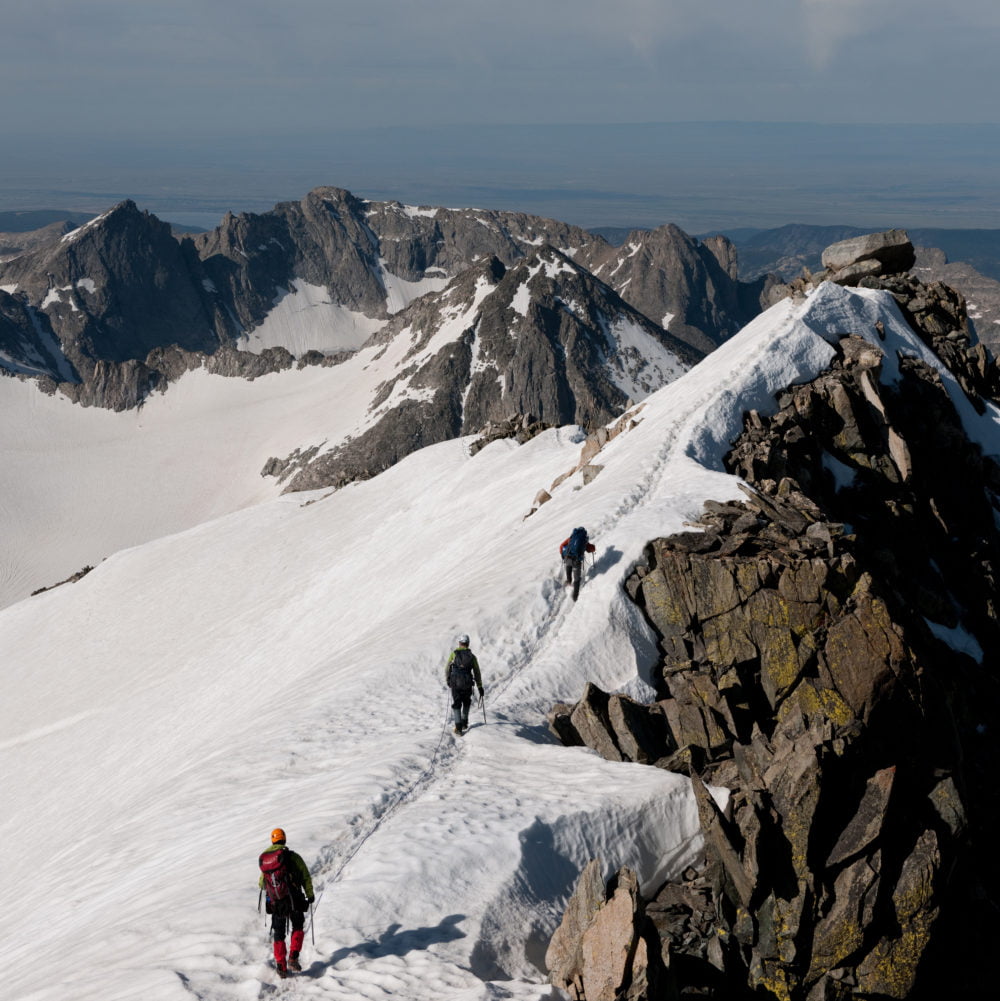
La ruta Gould-Phipps es la más utilizada para escalar el pico Gannett y, por lo general, se considera la vía estándar. Los escaladores realizan un recorrido de varios días a través de la cordillera Wind River antes de cruzar el glaciar Dinwoody en el tramo final hacia la cima. La mayoría de los grupos calculan entre cuatro y seis días para la expedición, incluyendo la caminata de aproximación, el intento de alcanzar la cima y el regreso. Los días de ascensión suelen comenzar mucho antes del amanecer para aprovechar que la nieve está más firme y evitar las tormentas eléctricas de la tarde, que son comunes durante la temporada de escalada de verano.
La aproximación por el noreste
La ruta de aproximación del noreste ofrece una alternativa más tranquila para los montañistas experimentados que buscan una experiencia más remota. Esta ruta requiere sólidas habilidades para orientarse, experiencia en el desplazamiento por glaciares y más tiempo en zonas remotas. La mayoría de las expediciones tardan entre cinco y seis días en completarse, dependiendo del clima, las condiciones de la nieve y el ritmo del grupo de escalada.
El enfoque de Dinwoody
El acceso al pico Gannett por el arroyo Dinwoody ofrece otra opción gratificante, especialmente para los escaladores que ingresan a la cordillera Wind River desde el lado este a través de la región de Wind River. Al igual que las otras rutas habituales, requiere pasar varios días en zonas remotas, contar con habilidades para desplazarse por glaciares y una planificación cuidadosa. Algunos escaladores experimentados incorporan este recorrido en expediciones más largas para explorar otros picos y áreas silvestres dentro de la cordillera.
¿Qué tan difícil es escalar el pico Gannett?
Escalar el pico Gannett requiere sólidas habilidades de montañismo, entre ellas, desplazarse por glaciares, orientarse en la ruta, dominar las técnicas de auto-detención y contar con una excelente condición física. Si bien la escalada técnica se considera generalmente de Clase 3, la combinación de glaciares, condiciones climáticas cambiantes, gran altitud y un largo acercamiento por zonas silvestres convierte al pico Gannett en uno de los objetivos de montañismo más exigentes de Wyoming.
Es fundamental contar con una preparación minuciosa, el equipo adecuado y buen criterio. Dado que las condiciones pueden cambiar rápidamente, los escaladores deben informarse sobre las condiciones actuales, conocer bien la ruta que planean seguir y estar preparados para ajustar sus planes si las condiciones climáticas o de nieve empeoran.
Clima en el pico Gannett: cómo prepararse para condiciones alpinas
El clima es uno de los mayores retos a los que se enfrentan los escaladores en el pico Gannett. La temporada principal de escalada suele ser en julio y agosto, aunque las condiciones varían considerablemente de un año a otro, dependiendo de las nevadas y el deshielo primaveral.
Las tormentas de tarde son comunes durante los meses de verano, por lo que es esencial salir temprano para la mayoría de los intentos de alcanzar la cima. Incluso en pleno verano, las temperaturas suelen bajar por debajo del punto de congelación durante la noche, y el viento puede provocar condiciones significativamente más frías en las altitudes más elevadas.
Las condiciones de la capa de nieve y de los glaciares también varían a lo largo de la temporada. Antes de iniciar una expedición, los escaladores deben consultar los pronósticos actuales, los informes recientes de expediciones y las condiciones proporcionadas por las agencias de gestión del territorio o por servicios de guías experimentados. Una preparación minuciosa es una de las claves para una escalada segura y exitosa.
Cómo llegar al pico Gannett: acceso y ruta de aproximación
¿Dónde está el pico Gannett?
El pico Gannett se encuentra en la cordillera Wind River, al oeste de Wyoming, en la Divisoria Continental, donde se unen los bosques nacionales Shoshone y Bridger-Teton. Al ser la montaña más alta de Wyoming, se encuentra en lo profundo de una zona designada como área silvestre, lo que la convierte en una de las cumbres más remotas de los 48 estados contiguos.
No hay caminos que lleven al pico Gannett. Para llegar a la cima es necesario realizar una travesía de varios días por zonas silvestres, ya sea a pie o a caballo, y la mayoría de las rutas implican recorrer entre 20 y 30 millas a pie antes de que los escaladores comiencen el ascenso final.
Puntos de acceso y puntos de partida de senderos
Hay varios puntos de partida que permiten acceder a Pico Gannett, y la ruta que elijas dependerá de tu experiencia, tu itinerario y el enfoque que prefieras. El punto de partida de Elkhart Park es el más utilizado, mientras que Trail Lake, Green River Lakes y Worthen Meadows ofrecen accesos adicionales a la cordillera Wind River.
Las condiciones de los senderos varían a lo largo de la temporada. La nieve puede permanecer hasta finales de junio o principios de julio, mientras que el verano trae flores silvestres a las altitudes más bajas y abre el acceso a las cuencas alpinas, los picos de granito y los paisajes glaciales más adentro de la cordillera.
La mayoría de los escaladores pasan dos días caminando hasta los campamentos tradicionales en zonas remotas antes de iniciar su intento de alcanzar la cima. Independientemente de la ruta, el viaje es una parte fundamental de la experiencia, ya que ofrece paisajes extraordinarios mucho antes de llegar al pico Gannett.
Comunidades Gateway
Los visitantes suelen comenzar su aventura en el pico Gannett en una de las tres comunidades de acceso, dependiendo de la ruta que elijan. Dubois y Lander ofrecen un acceso cómodo a muchas rutas de aproximación del este a través de Wind River Country, mientras que Pinedale es el punto de partida para los escaladores que se acercan desde el lado occidental de la cordillera.
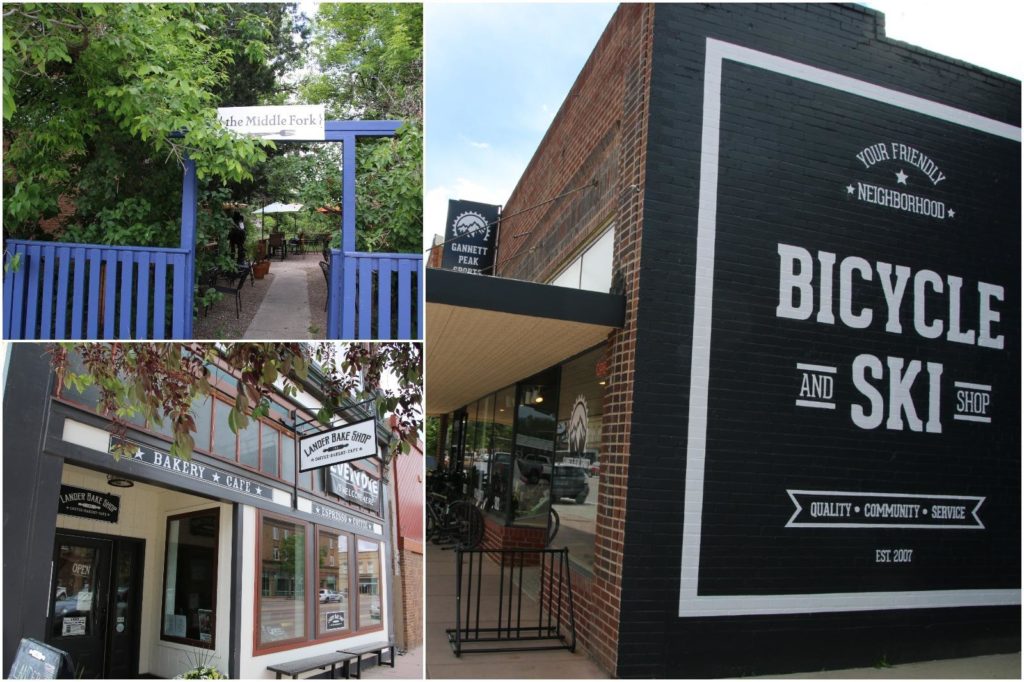
Cada comunidad ofrece alojamiento, restaurantes, tiendas de abarrotes, tiendas de artículos para actividades al aire libre y otros servicios que facilitan la preparación para una expedición de varios días. Muchos escaladores pasan una o dos noches revisando los pronósticos del clima, organizando su equipo y haciendo los preparativos finales antes de adentrarse en la naturaleza.
¿Qué comunidad está más cerca del pico Gannett?
El acceso al pico Gannett depende de la ruta que elijas. Si bien Pinedale ofrece acceso a muchas rutas de aproximación por el oeste, Dubois y Lander son excelentes puntos de entrada para los visitantes que desean explorar el lado este de la cordillera Wind River a través de la región de Wind River Country. Cada una de estas localidades ofrece alojamiento cómodo, opciones gastronómicas y servicios prácticos antes o después de una expedición por la naturaleza.
Explora más allá del pico Gannett
Aunque el pico Gannett es el destino de montañismo más conocido de la región, la cordillera Wind River que lo rodea ofrece innumerables oportunidades para la aventura al aire libre.
Lagos alpinos y naturaleza salvaje
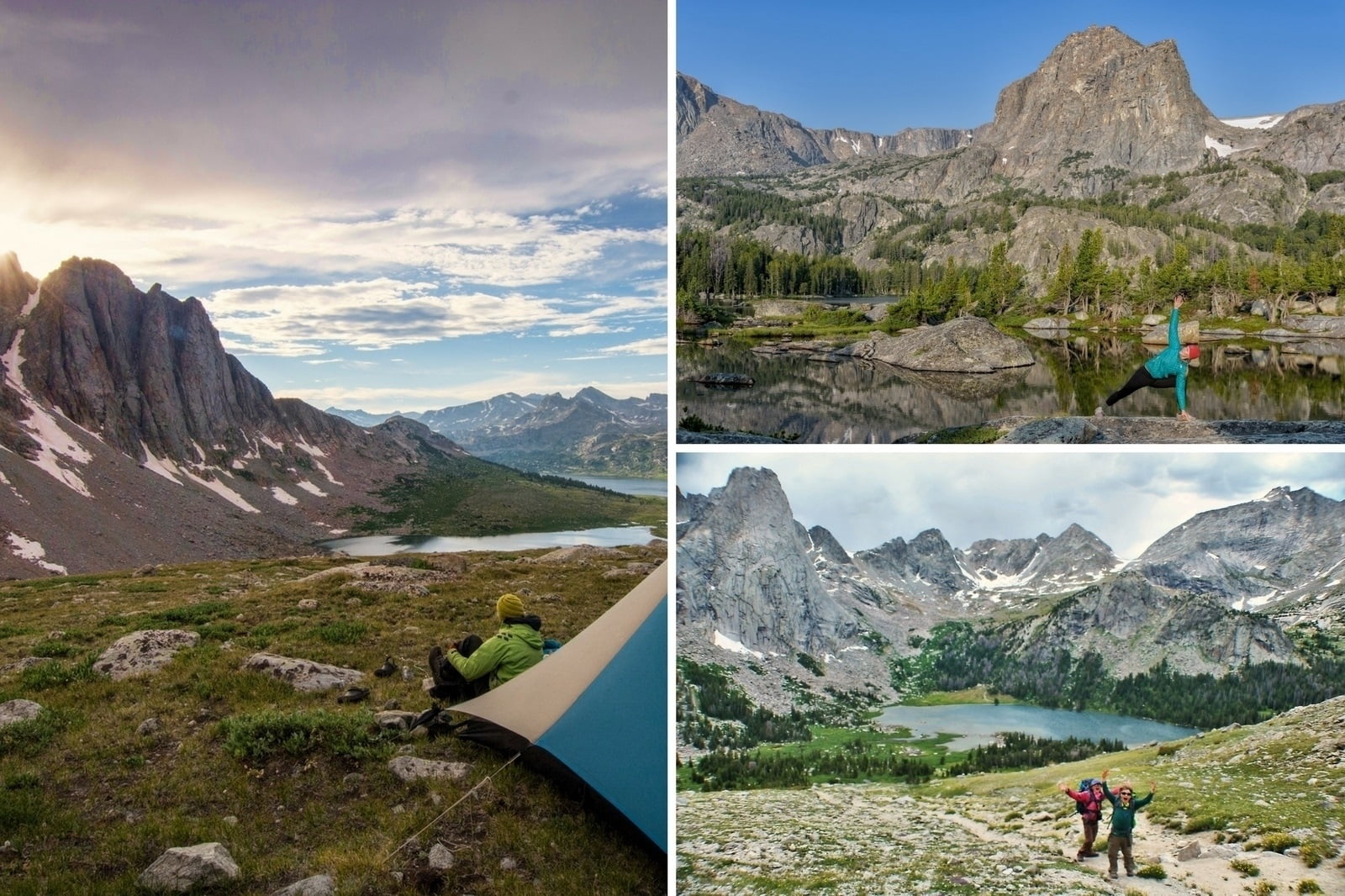
Cientos de lagos alpinos se encuentran dispersos por toda la cordillera, incluyendo destinos como Titcomb Basin e Island Lake. Los excursionistas, pescadores y fotógrafos se ven recompensados con paisajes espectaculares, una abundante vida silvestre y una verdadera sensación de soledad.
Más aventuras en la montaña
La cordillera Wind River alberga más de 40 picos con nombre que superan los 13,000 pies, lo que la convierte en uno de los principales destinos alpinos de América del Norte. Los escaladores experimentados suelen combinar una expedición al pico Gannett con la ascensión a otras cimas o con largas aventuras de senderismo con mochila.
Más cosas por descubrir en la región de Wind River
Antes o después de tu expedición, tómate un tiempo para conocer las comunidades y los paisajes que hacen que la región de Wind River sea única. Explora el Parque Estatal Sinks Canyon, cerca de Lander; visita el Centro Nacional de Interpretación del Carnero de las Montañas en Dubois; o disfruta de recorridos panorámicos, museos y restaurantes locales que muestran la rica historia, la cultura y el patrimonio al aire libre de la región.
Restauración, suministros y servicios de guía
Los visitantes que salgan de Dubois, Lander o Pinedale encontrarán todo lo necesario para prepararse para una expedición por zonas silvestres, incluyendo supermercados, restaurantes de propiedad local, cafeterías y tiendas de artículos para actividades al aire libre.
Las tiendas locales ofrecen mapas, información sobre los senderos, equipo y suministros de última hora, mientras que los servicios de guías experimentados pueden ayudar a los escaladores que busquen apoyo profesional para su aventura en el pico Gannett. Contratar a un guía calificado es una buena opción para quienes se inician en las travesías por glaciares o buscan ganar confianza en la montaña más alta de Wyoming.
Logística para acampadas y excursiones en zonas remotas
La mayoría de los escaladores acampan en sitios tradicionales dispersos de acampada en zonas silvestres a lo largo de la ruta de aproximación que eligen. Las zonas populares para acampar cerca de Titcomb Basin, Dinwoody Creek y otros lugares establecidos en zonas silvestres permiten a los escaladores dividir el recorrido en etapas manejables, al tiempo que minimizan el impacto en este frágil entorno alpino.
Los visitantes deben seguir los principios de «No dejes rastro» acampando en superficies resistentes, llevándose todos los desechos y respetando la vida silvestre y a los demás usuarios de las áreas silvestres.
Por lo general, se puede obtener agua de los arroyos, del deshielo y de los lagos alpinos a lo largo de la ruta, pero siempre se debe tratar antes de beberla, ya sea con un filtro, con pastillas purificadoras o hirviéndola.
Preguntas frecuentes sobre el pico Gannett
¿Cuáles son las principales rutas de escalada al pico Gannett?
Las tres rutas principales hacia el pico Gannett son la ruta Gould-Phipps, la ruta del noreste y la ruta Dinwoody. La ruta Gould-Phipps es la más transitada, mientras que las rutas del noreste y Dinwoody ofrecen alternativas más remotas para montañistas experimentados. Todas las rutas requieren una aproximación de varios días por zonas silvestres, travesía por glaciares y una planificación cuidadosa.
¿Qué tan difícil es escalar el pico Gannett?
El pico Gannett se considera uno de los objetivos de montañismo más exigentes de Wyoming. Aunque la escalada técnica suele clasificarse como de Clase 3, la combinación de desplazamientos por glaciares, condiciones climáticas cambiantes, gran altitud y una aproximación de varios días por zonas remotas requiere una excelente condición física, experiencia en montañismo y una toma de decisiones acertada.
¿Qué comunidades dan acceso al pico Gannett?
El acceso depende de la ruta que elijas. Dubois y Lander sirven como puertas de entrada a muchas rutas de acceso del este a través de Wind River Country, mientras que Pinedale brinda acceso a las rutas del oeste. Cada comunidad ofrece alojamiento, restaurantes, tiendas de artículos para actividades al aire libre y otros servicios para ayudar a los visitantes a prepararse para una expedición por zonas remotas.
¿Se encuentra el pico Gannett en el Parque Nacional de Yellowstone?
No. El pico Gannett se encuentra en la cordillera Wind River, en la Divisoria Continental, donde se unen los bosques nacionales Shoshone y Bridger-Teton. Aunque la cordillera se encuentra al sureste del Parque Nacional de Yellowstone, el pico Gannett está fuera del parque y ofrece una experiencia en la naturaleza totalmente diferente.
¿Se puede llegar en auto al Pico Gannett?
No. No hay caminos que lleven al pico Gannett. Todas las rutas hacia la cima requieren una caminata de varios días a través de una zona silvestre protegida antes de que los escaladores lleguen a la montaña. La mayoría de los visitantes comienzan su recorrido desde uno de los varios puntos de partida establecidos, dependiendo de la ruta que elijan.
¿Cuál es la altitud del pico Gannett?
El pico Gannett alcanza los 13,804 pies (4,207 metros), lo que lo convierte en la montaña más alta de Wyoming y en el punto más alto del estado.
¿Dónde está el pico Gannett?
El pico Gannett se encuentra en la cordillera Wind River, al oeste de Wyoming, sobre la divisoria continental. La cima se ubica en el límite entre los bosques nacionales Shoshone y Bridger-Teton, dentro de las áreas silvestres Bridger y Fitzpatrick.
Prepárate para tu aventura
Ya sea que tu meta sea llegar a la cima más alta de Wyoming o simplemente explorar los espectaculares paisajes de la cordillera Wind River, visitar el pico Gannett requiere una preparación minuciosa. El acondicionamiento físico, el equipo adecuado, la planificación de la ruta y el conocimiento de las condiciones cambiantes de la montaña contribuyen a que la experiencia sea segura y gratificante.
Para los escaladores experimentados, llegar a la cima es un logro extraordinario. Para otros, recorrer los senderos cercanos, explorar los lagos alpinos o simplemente admirar la grandiosidad de la cordillera Wind River ofrece una forma igualmente memorable de disfrutar de este paisaje extraordinario.
No importa cómo elijas vivirla, la cima del Gannett representa el espíritu salvaje de la región de Wind River. Desde las acogedoras comunidades de entrada hasta la naturaleza agreste y los inolvidables paisajes alpinos, una visita a la montaña más alta de Wyoming es una aventura que permanecerá en tu memoria mucho tiempo después de tu partida.