July 11, 2025
This guide is a seasonal showcase of Wyoming’s native flowers. It highlights some of the most vibrant and resilient wildflowers in Wind River Country. From alpine slopes to sunlit meadows, these blooms offer a colorful glimpse into the region’s natural beauty. Whether you’re a hiker, nature lover, photographer or road tripper, exploring wildflowers is a rewarding way to connect with the landscape. Use this guide to discover what’s in bloom, where to look and how to enjoy these delicate plants responsibly.
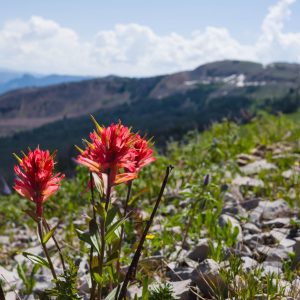
When to Visit for Peak Wildflower Viewing
Wind River Country offers a multi-month wildflower season that spans from April through September, with different elevations blooming in succession. In spring, the valley floor comes alive with color—look for early blooms along roadsides and lowland trails in April and May. By summer, mid-elevation meadows and foothills burst with native wildflowers, especially in June and July.
As the season progresses, alpine areas bloom, peaking in late summer through early fall. These high-elevation zones offer stunning displays near glacial lakes and rocky ridgelines.
For the most vivid views, plan your wildflower outings for early morning or after a light rain, when colors are especially vibrant and blooms are freshly opened. Whether you’re visiting for a day hike or a multi-day adventure, Wind River Country provides a rolling bloom cycle that rewards visitors all season long.
A Seasonal Guide to Wind River Country’s Wildflowers
Wildflowers in Wyoming come to life in waves, and Wind River Country offers a spectacular, season-by-season display of color and biodiversity. This guide invites you to explore Wyoming’s native flowers as they bloom from valley floors in spring to alpine ridges in late summer. Whether you’re capturing the perfect photo, enjoying trail-side sightings or taking a family-friendly nature walk, each season offers something new to discover.
Browse this visual and ecological guide to see what’s in bloom throughout the year—and where to find it. From delicate spring ephemerals to resilient alpine blossoms, Wind River Country’s wildflowers are a living showcase of the region’s changing landscapes.
Spring Wildflowers (April–June)
Sego Lily (Calochortus nuttallii)
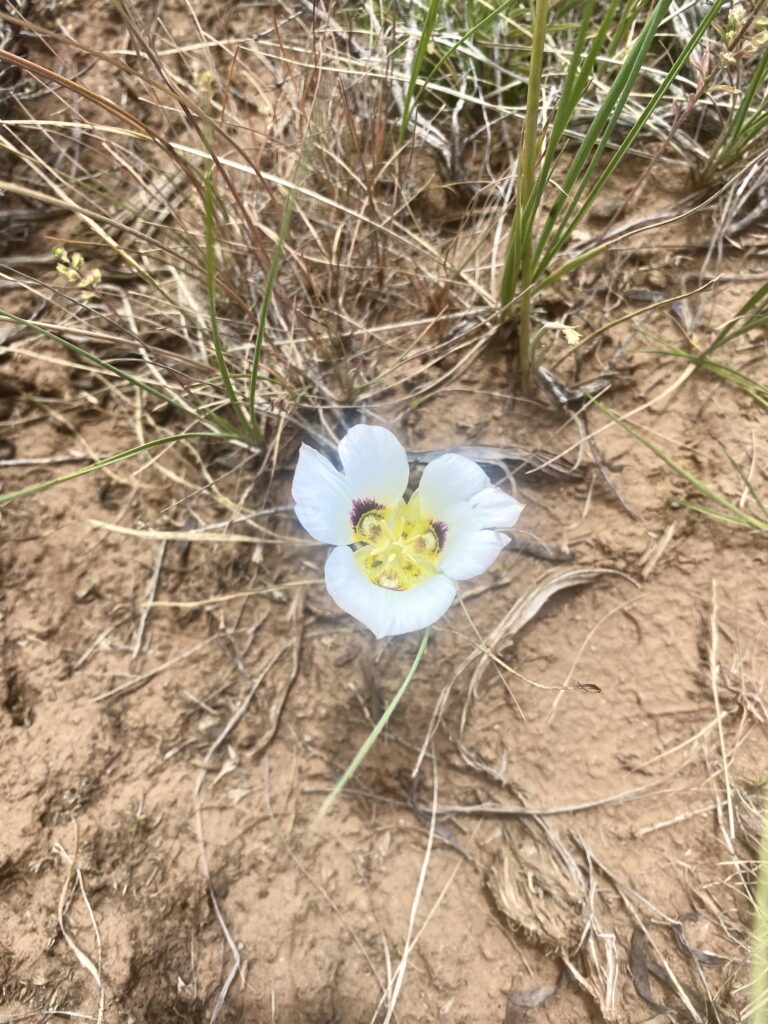
The Sego Lily (Calochortus nuttallii) is a striking wildflower with elegant white to lavender petals with maroon or yellow accents at the base, which creates a delicate and colorful display. Blooming in late spring, these flowers dot the landscapes of Wind River Country’s foothills, especially on dry hillsides, sagebrush flats and open meadows.
Their graceful appearance makes them easily recognizable, especially when spotted during short hikes or roadside pullouts. Historically, the Sego Lily’s root was an essential food source for pioneers in the West, and it became known as a “life-saving plant” due to its nutritional value in survival situations.
Not only does the Sego Lily play an important role in the history of Western botanical exploration, but it also holds the distinction of being Utah’s state flower. This provides an interesting opportunity for those traveling through the region to recognize it across neighboring areas. Ecologically, native bees are the primary pollinators of the Sego Lily. It thrives in disturbed soils, making it a common sight in areas impacted by human activity.
Quick-Reference List:
- Bloom time: late spring
- Habitat: dry hillsides, sagebrush flats, open meadows
- Ecological facts: thrives in disturbed soils; pollinated by native bees
- Fun fact: once nicknamed a “life-saving plant” by pioneers
Prairie Smoke (Geum triflorum)
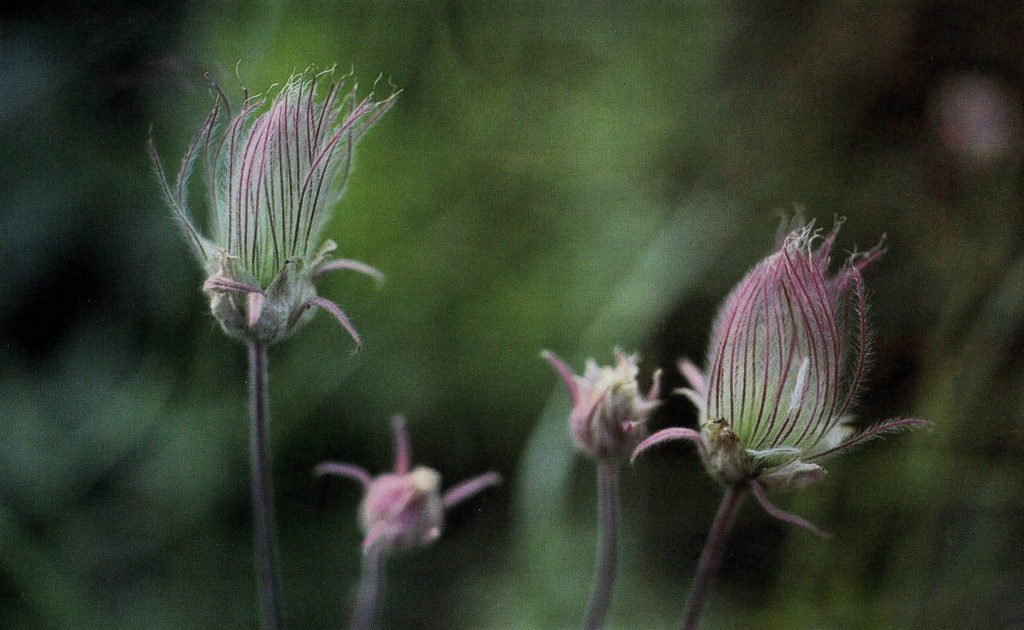
Prairie Smoke (Geum triflorum) is an eye-catching wildflower known for its unique bell-shaped blooms with wispy, smoky seed heads, which give it an ethereal appearance. Blooming in early spring, typically around April or May, it’s one of the first flowers to emerge after the snow melts in the lowland meadows. This flower thrives in grassy areas and is best seen near Sinks Canyon or in the foothills below mid-elevation. If you’ve ever wondered, “What are those pink fuzzy flowers in Wyoming?”—you’re likely referring to this charming species.
As a member of the rose family (Rosaceae), Prairie Smoke is often referenced in field guides for its potential use in tea-like preparations. Additionally, it plays a vital role in attracting early-season pollinators, such as bees and butterflies. Also referred to as old man’s whiskers, or three-flowered avens, these soft, pinkish flowers gradually transition to a smoky hue, making them a favorite among photographers. Local tip: to capture its beauty, it’s best to photograph Prairie Smoke at eye level during the early morning light when the flower is bathed in a gentle glow.
Quick-Reference List:
- Bloom time: April to May
- Habitat: lowland meadows, grassy areas below mid-elevation
- Ecological fact: attracts early-season pollinators
- Fun fact: often referenced for tea-like preparations in field guides
- Photographer’s tip: best photographed at eye level during early morning light
Shooting Star (Dodecatheon pulchellum)
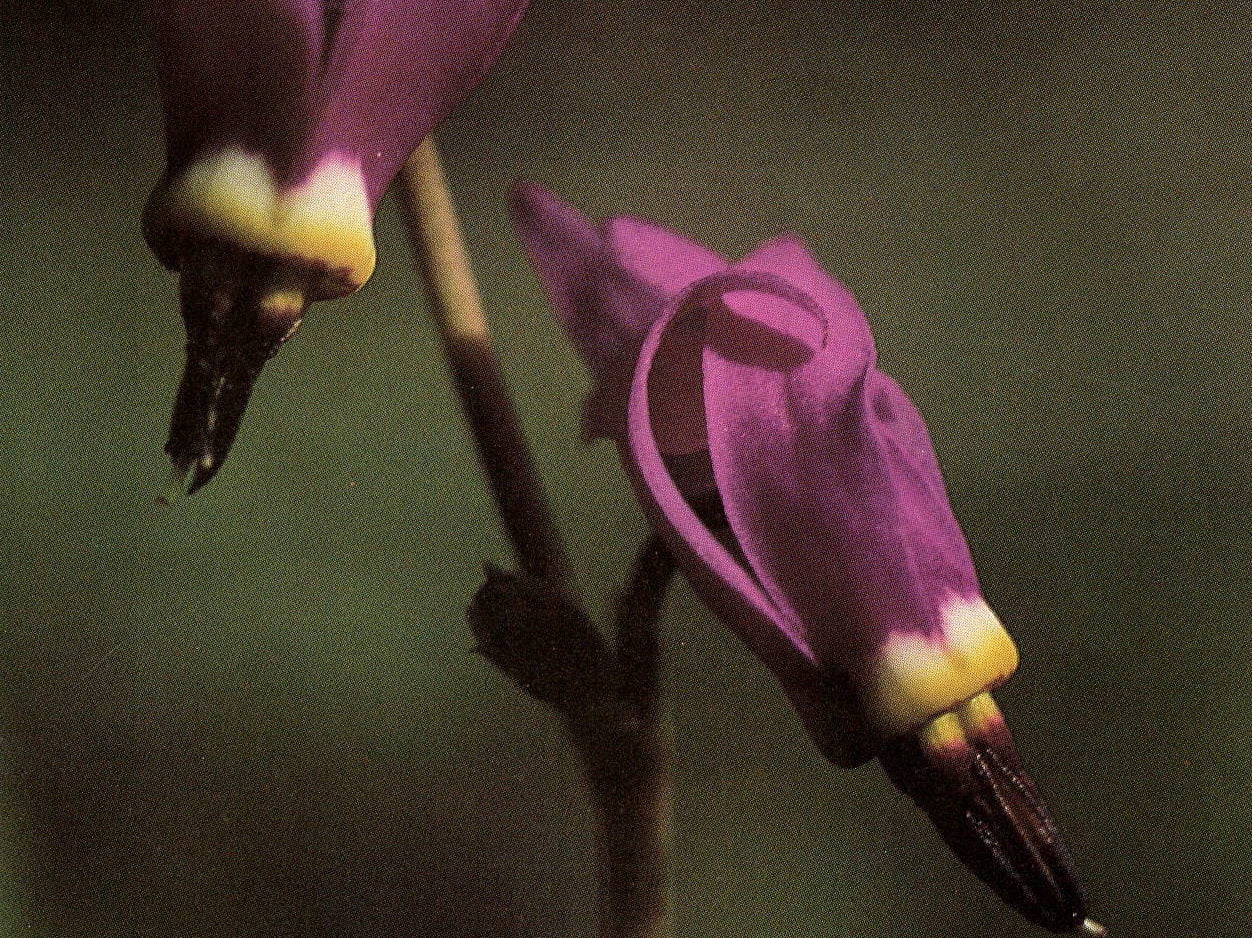
The Shooting Star (Dodecatheon pulchellum) is one of Wyoming’s most captivating wildflowers, with its reflexed magenta petals and yellow center that resembles a “shooting star.” These flowers bloom from late spring to early summer, adding bursts of vivid color to wet meadows and creeksides. Typically found at higher elevations after the snow has melted, Shooting Stars are a signature plant of the alpine ecosystems. Their rare shape and bold appearance make them particularly prized by botanists and nature lovers alike.
Shooting Stars belong to the primrose family and rely on a rather uncommon floral interaction with buzz-pollinating bees. The presence of these flowers is a strong indicator of a healthy, moist alpine ecosystem, as they thrive in environments with ample moisture and protection from intense midday heat. Therefore, the best time to observe them is in the early morning, when their vivid colors are especially vibrant before the midday sun takes its toll.
Quick-Reference List:
Bloom time: late spring to early summer
Habitat: wet meadows, creeksides, higher elevations after snowmelt
Ecological fact: pollinated by buzz-pollinating bees, an uncommon floral interaction
Fun fact: indicates healthy, moist alpine ecosystems
Photographer’s tip: best seen early morning before midday heat
Arrowleaf Balsamroot (Balsamorhiza sagittata)
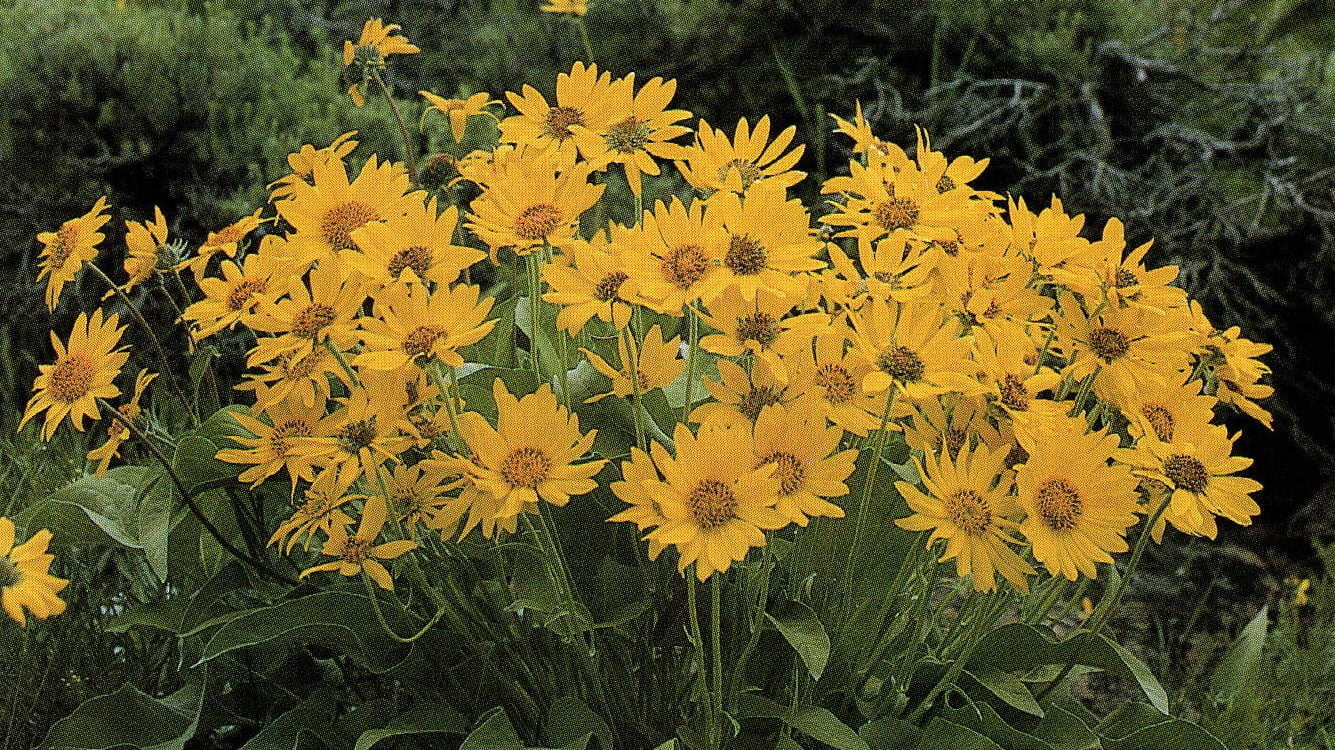
Arrowleaf Balsamroot (Balsamorhiza sagittata) is a stunning wildflower that paints the hillsides with its bright yellow, daisy-like flowers during the spring months. Blooming from May to June, these vibrant flowers are most commonly found on south-facing slopes. If you’ve thought, “What are those yellow flowers on Wyoming hillsides?” chances are you’ve encountered the vibrant Arrowleaf Balsamroot.
Beyond their beauty, these wildflowers play an important ecological role in supporting early-season pollinators. Deep-rooted and drought-tolerant, the Arrowleaf Balsamroot is well adapted to the region’s dry conditions. It often thrives in areas with minimal water. This deep root system helps stabilize soil on sloped terrain, reducing erosion and contributing to the health of the landscape. Historically, the plant was recorded in botanical surveys for its edible roots and resinous leaves. To capture this flower at its best, the morning light provides a stunning backdrop, especially when paired with sweeping hillside views.
Quick-Reference List:
- Bloom time: May to June
- Habitat: south-facing slopes
- Ecological fact: supports early-season pollinators and stabilizes soil on slopes
- Fun fact: historically used for its edible roots and resinous leaves
- Photographer’s tip: best captured in morning light with sweeping views
Indian Paintbrush (Castilleja linariifolia)
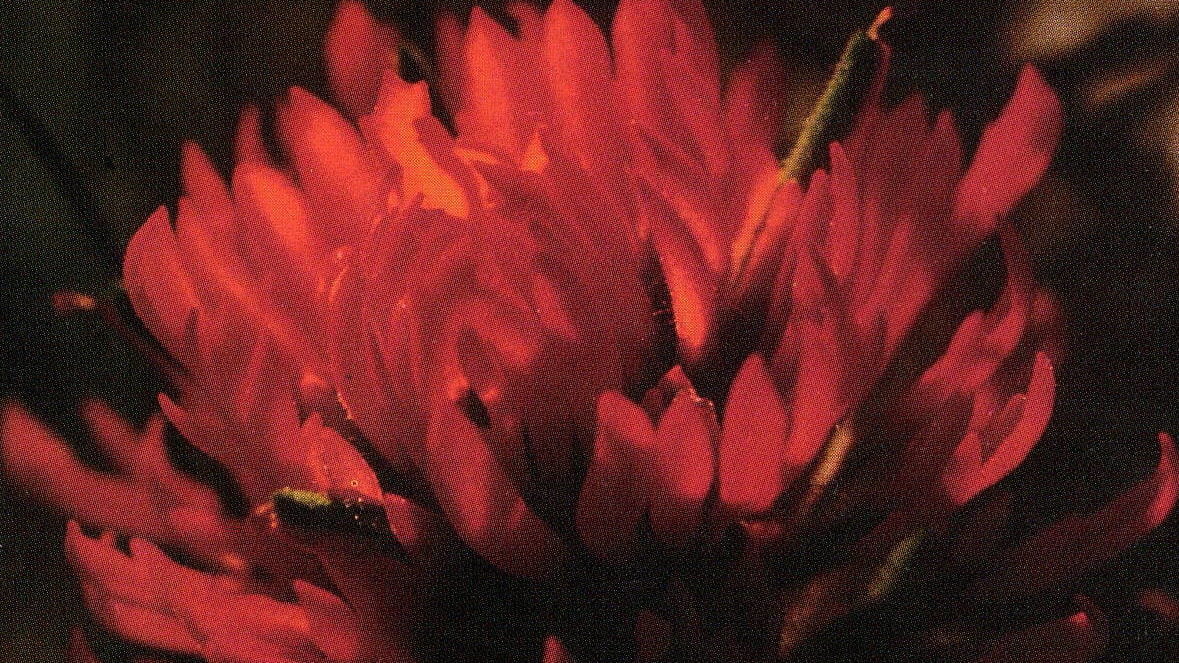
Wyoming’s iconic State Flower, Indian Paintbrush (Castilleja linariifolia) is renowned for its vibrant red, pink or orange bracts—which are often mistaken for petals. Resembling strokes of paint splashed across the landscape, these showy blooms make the plant easily recognizable. Indian Paintbrush can be found in a variety of habitats, from valley floors to high alpine meadows, making it a versatile wildflower that thrives in diverse environments. Some of the best places to spot it include Red Canyon, trails throughout the Shoshone National Forest and roadside pullouts in early June.
Interestingly, Indian Paintbrush is a semi-parasitic plant. It taps into the roots of nearby plants to extract nutrients, which helps it survive in less-than-ideal soils. In field botany, it has long been noted for its bright color and remarkable hardiness, especially in the higher elevations. A common question about this wildflower is, “Is Indian Paintbrush poisonous?” While it is not typically consumed, its chemistry can vary depending on the host plant it parasitizes, so caution is advised. Photographers appreciate Indian Paintbrush’s tendency to bloom in clusters, creating vibrant fields of color perfect for wide-angle shots or drone photography to capture its full glory.
Quick-Reference List:
- Bloom time: early June
- Habitat: from valley floors to alpine meadows
- Ecological fact: semi-parasitic—taps into nearby roots for nutrients
- Fun fact: Wyoming’s State Flower
- Photographer’s tip: best captured in clusters for wide-angle or drone shots
Bitterroot (Lewisia rediviva)
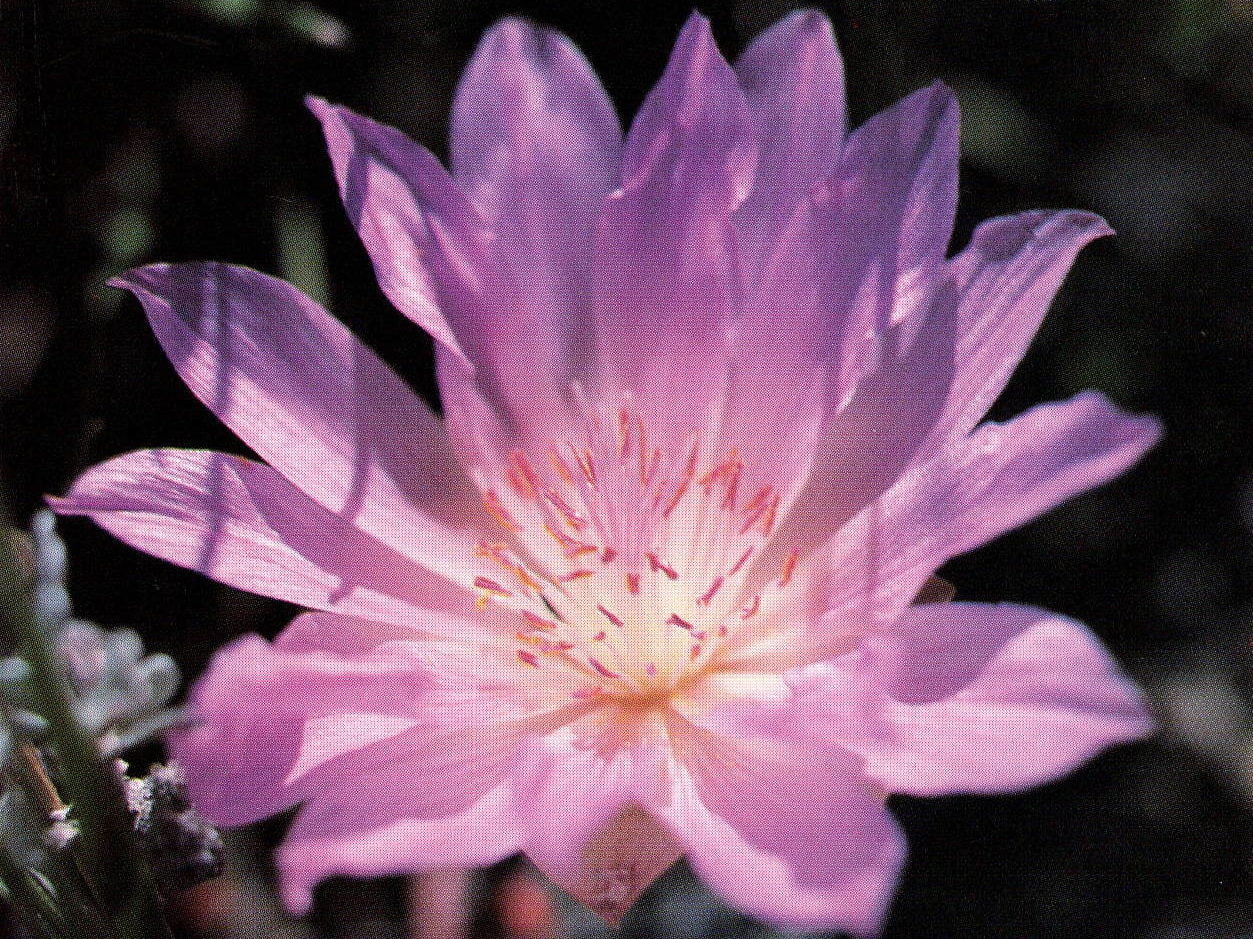
Bitterroot (Lewisia rediviva) is a low-growing perennial that captures attention with its petals arranged in a tight starburst shape, ranging in hues from soft pink to vibrant rose. Part of the purslane family, Bitterroot thrives in arid soil and dry, rocky foothills. It is typically found in areas with exposed, sunny slopes during the early morning hours from May to July.
Historically significant, the Bitterroot is well-documented in early Western botanical records as a vital food source. Its starchy root, traditionally harvested before the plant blooms, was often consumed for its nutritional value. The flavor of the root, however, can become quite bitter if harvested after the flower has already bloomed, lending the plant its distinct name. Notably, the plant was also collected by Lewis during the famous Lewis and Clark Expedition, further cementing its role in the history of Western exploration.
Quick-Reference List:
- Bloom time: May to July
- Habitat: dry, rocky foothills; sunny slopes
- Fun fact: collected by Lewis during the Lewis and Clark Expedition
- Why it’s called bitterroot: root is bitter if harvested after bloom
Summer Wildflowers (July–August)
Columbine (Aquilegia coerulea)
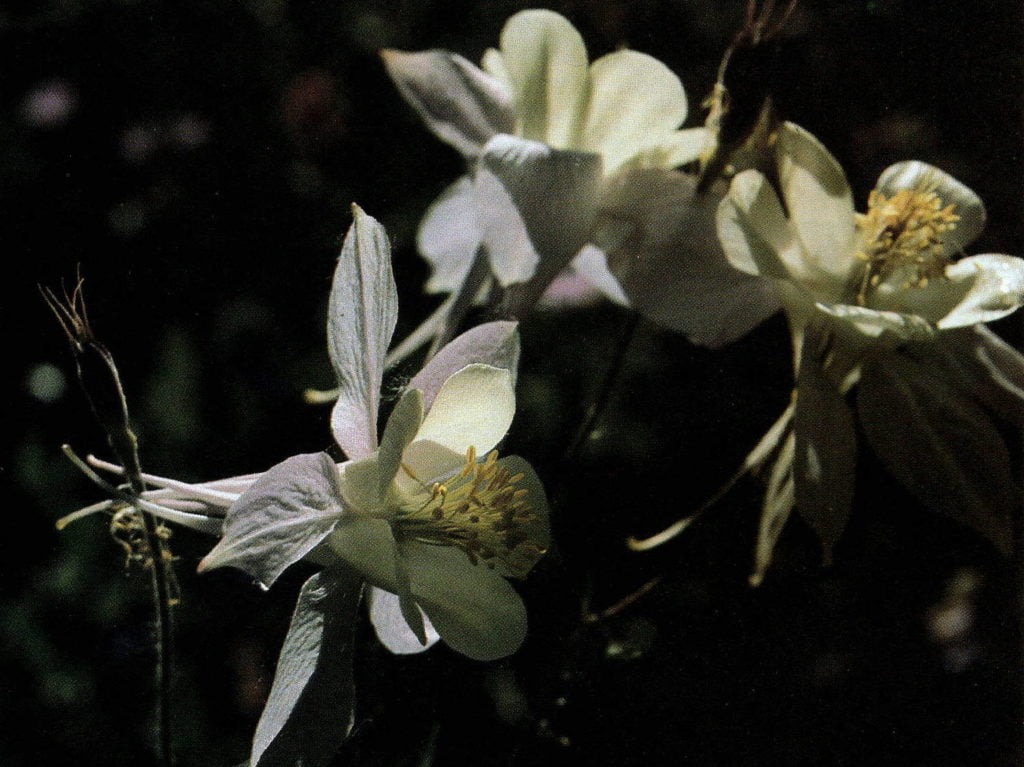
Columbine (Aquilegia coerulea) is known for its spurred petals, which come in shades of blue, purple and white. This beautiful flower grows in shady forests, aspen groves and near water at mid-to-high elevations. Blooming in July, Columbine is an important nectar source for hummingbirds and native bees. Its unique shape and vibrant colors have made it historically admired by botanists and nature enthusiasts alike. However, it’s worth noting that some parts of the plant are mildly toxic if consumed.
Columbine is the state flower of Colorado, making it instantly recognizable to many regional travelers. A fun characteristic of this flower is that it often closes up during rain or at night—a fascinating detail that hikers and photographers may appreciate when trying to capture its delicate features.
Quick-Reference List:
- Bloom time: July
- Habitat: shady forests, aspen groves, near water (mid-to-high elevations)
- Fun fact: often closes during rain or at night
- Caution: some parts are mildly toxic if consumed
Lewis’s Monkeyflower (Mimulus lewisii)
Lewis’s Monkeyflower (Mimulus lewisii) can be recognized for its bright magenta or pink flowers, which are characterized by a wide “grinning” face. It grows near creeks and seeps in alpine elevations, blooms in mid to late summer and provides a splash of color during the warmer months. The species was named after Meriwether Lewis, who first collected it during the famous Lewis and Clark Expedition.
Known for its beauty and healing properties, Lewis’s Monkeyflower has traditionally been used in skin treatments like poultices to soothe irritations. Beyond its medicinal uses, this brightly colored flower is a vital part of its environment, drawing in butterflies and bumblebees with its sweet nectar, which helps pollinate other plants in high-altitude settings. Hikers often spot these flowers near mountain streams and springs.
Quick-Reference List:
- Bloom time: mid to late summer
- Habitat: near creeks and seeps (alpine elevations)
- Fun fact: named after Meriwether Lewis, who collected it during the Lewis and Clark Expedition
- Uses: soothing external applications (poultices)
Elephanthead (Pedicularis groenlandica)
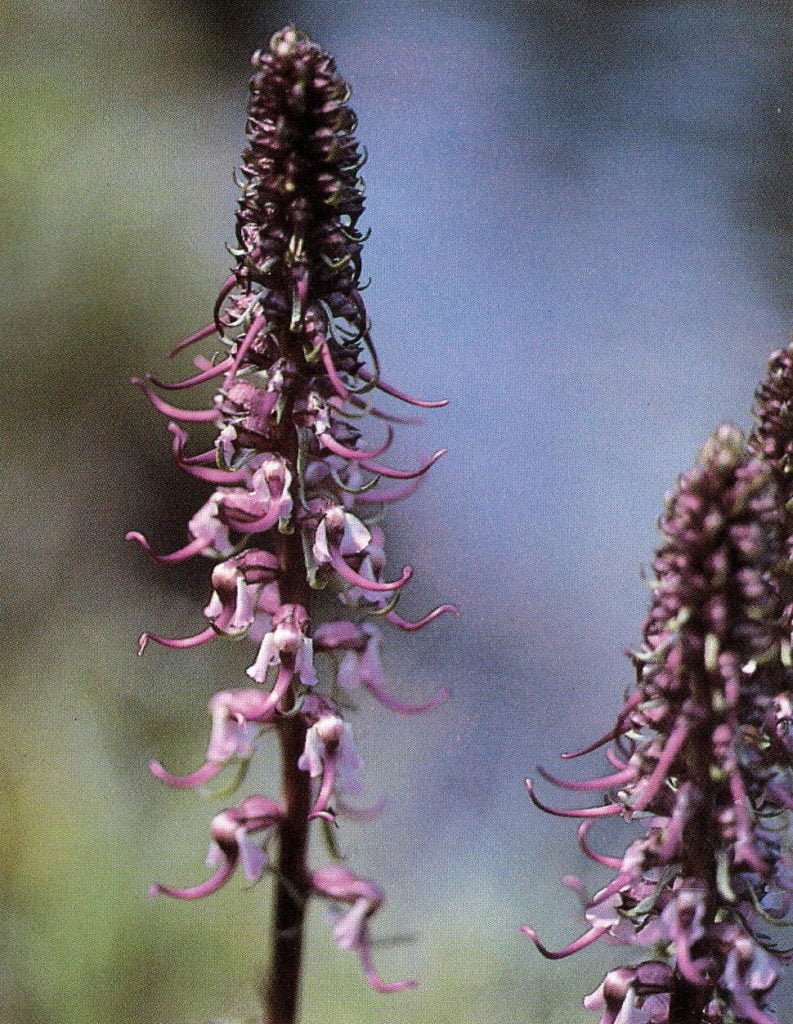
Elephant Head (Pedicularis groenlandica) is a unique and fascinating wildflower that resembles miniature elephant heads, with the trunk and ears clearly visible in its intricate blooms. Found in wet, high-elevation meadows and along creek edges, this flower usually blooms in mid-summer. It’s often associated with habitats where snow lingers longer, as it requires prolonged wet conditions to flourish. Part of the broomrape family, it is known for its mildly sedative properties, a detail frequently noted in field botany guides.
Elephant Head is important to local wildlife, particularly elk, which often graze on its flowers in early summer. The distinctive shape and rich color offer photographers the perfect opportunity for close-up macro photography, capturing the finer details of this wildflower’s complex features.
Quick-Reference List:
- Bloom time: mid-summer
- Habitat: wet, high-elevation meadows, creek edges
- Fun fact: resembles miniature elephant heads, with trunk and ears clearly visible
- Uses: mildly sedative properties
Fireweed (Chamerion angustifolium)
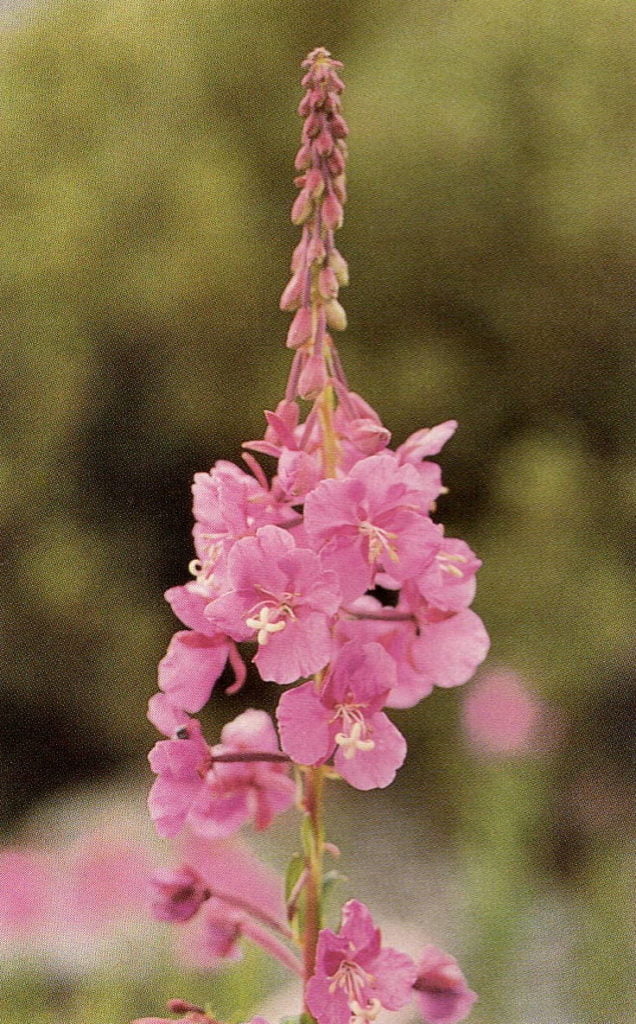
Fireweed (Chamerion angustifolium) is an eye-catching perennial known for its tall spires of bright pink to purple blooms, which bloom in mid to late summer. This hardy plant thrives in disturbed areas, such as post-wildfire zones, trail edges and avalanche paths. It is often one of the first species to return after a fire. Its rapid regrowth in these environments makes it a symbol of renewal, representing the resilience of nature in the wake of destruction. Fireweed’s ability to quickly colonize disturbed landscapes not only brings beauty to these areas but also plays an important role in stabilizing soil and supporting new vegetation.
The young shoots and leaves of Fireweed are edible and have been used in foraged cooking in many cultures, although it is always recommended to check local guidelines before harvesting. Historically, the fibers of Fireweed were used in basic weaving and to make twine, providing an essential material for survival in earlier times. Commonly found in open, sunlit areas, Fireweed is often seen along forest service roads and trailheads, where it adds a splash of color to the natural scenery.
Quick-Reference List:
- Bloom time: mid to late summer
- Habitat: disturbed areas (post-wildfire zones, trail edges, avalanche paths)
- Fun fact: symbolizes renewal after wildfires
- Uses: young shoots and leaves are edible; fibers can be used in weaving/twine
Cow Parsnip (Heracleum maximum)
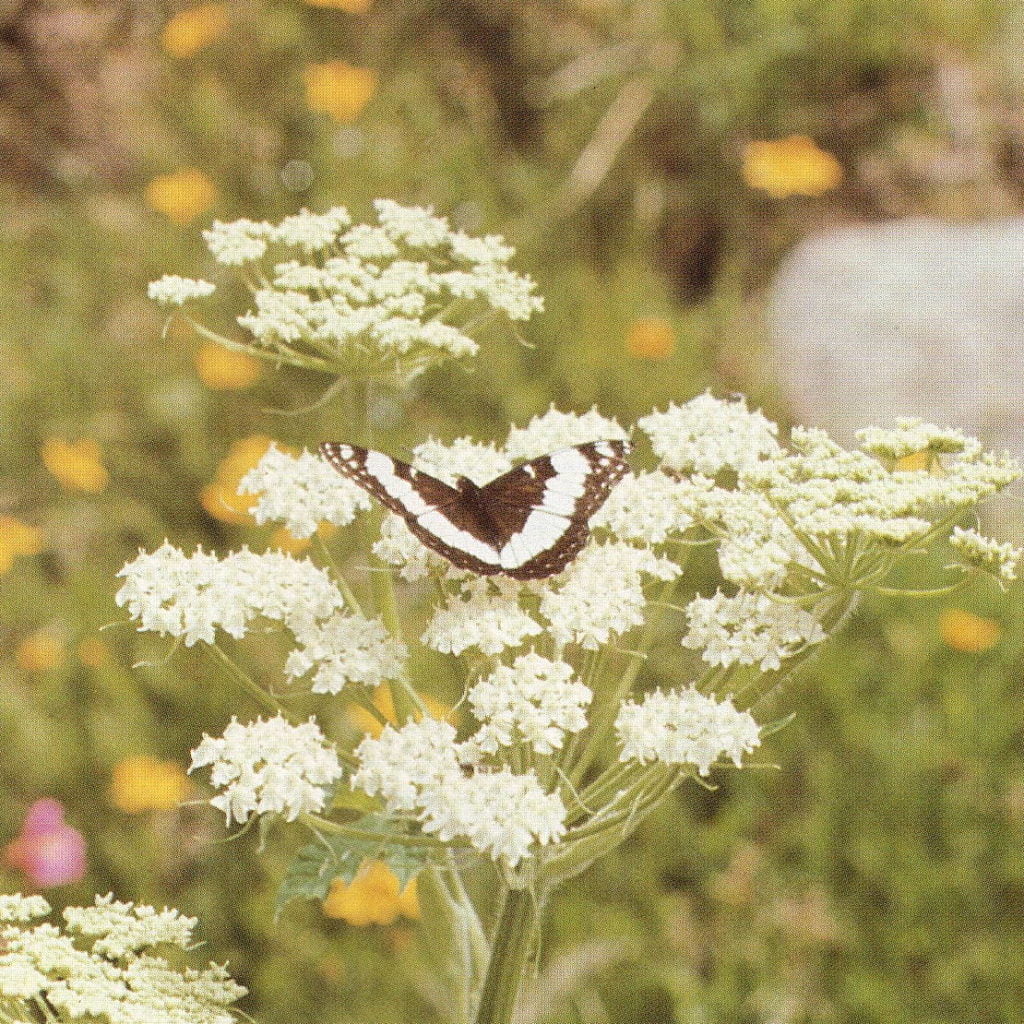
Cow Parsnip (Heracleum maximum) is known for its tall, sturdy stalks topped with wide, umbrella-shaped clusters of white flowers. Blooming from early to mid-summer, these dramatic flower heads stand out against the green of the surrounding forest or streambank. Cow Parsnip is pollinated by flies and beetles, while also attracting larger animals such as bears and elk, which are drawn to its foliage.
This plant is often mistaken for the highly toxic poison hemlock, which shares a similar appearance. While its towering stalks and large, white flower clusters make for a dramatic and impressive sight, Cow Parsnip is best viewed from a distance. If you do need to get closer—perhaps for a photograph—wearing gloves is a smart precaution to avoid skin irritation from the plant’s sap.
Quick-Reference List:
- Bloom time: early to mid-summer
- Habitat: forest edges, streambanks, moist areas
- Ecological fact: pollinated by flies and beetles
- Fun fact: often mistaken for poison hemlock
Lupine (Lupinus spp.)
Lupine (Lupinus spp.) is a vibrant wildflower known for its spiky clusters of purple-blue, pea-like flowers that bloom from early to late summer in mountain meadows, rocky slopes and roadsides. Lupine is a nitrogen fixer, enriching the soil by converting atmospheric nitrogen into a form that plants can use, which helps to nourish the surrounding ecosystem. Crucial for pollinators, such as bees and butterflies, it is toxic when immature. This toxicity, however, does not deter grazing animals that feed on the plant when it has fully matured, as they have developed a tolerance for its compounds.
In regional folklore, Lupine has been associated with predicting successful game seasons, with its blooming patterns thought to signal favorable hunting conditions. For photographers, Lupine is incredibly photogenic, and it makes for a spectacular wide shot in open meadows, where its tall, colorful spikes add an almost magical quality to the scene.
Quick-Reference List:
- Bloom time: early to late summer
- Habitat: mountain meadows, roadsides, rocky slopes
- Ecological fact: fixes nitrogen into the soil
- Fun fact: associated with predicting successful game seasons
Late Summer and Fall Wildflowers (August–September)
Indian Pond Lily (Nuphar polysepala)
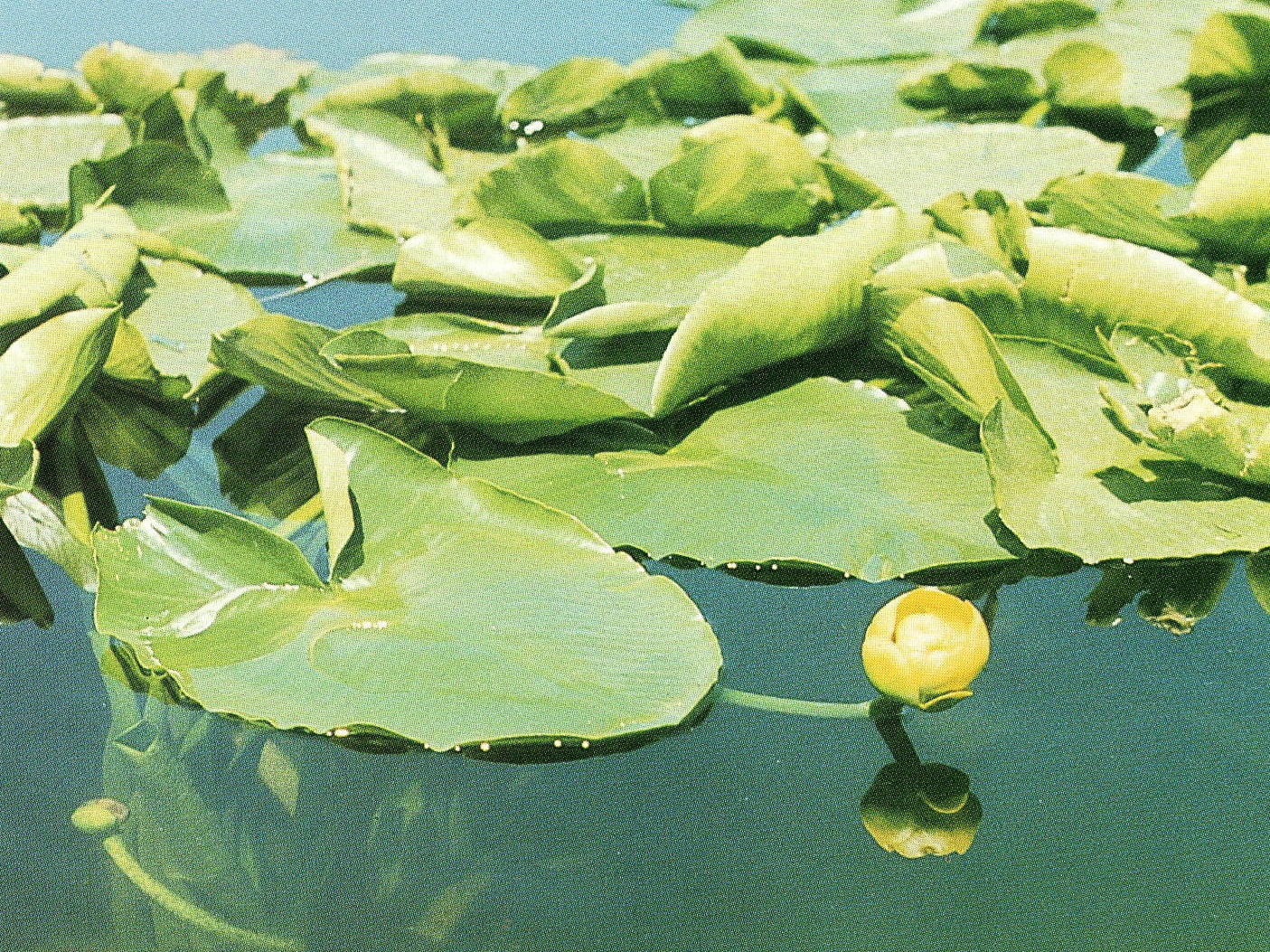
Indian Pond Lily (Nuphar polysepala) is an aquatic plant known for its floating yellow blooms and large, glossy green pads that create a serene and picturesque scene on still water. Found in ponds formed by beaver dams or slow-moving streams, this plant thrives in calm, shallow waters. Blooming from summer into early fall, its cheerful yellow petals provide a vivid contrast against the deep green of its wide, round leaves.
The Indian Pond Lily has been documented historically for seed and root use in food contexts and is not only valuable to humans, but also to wildlife. It serves as an important food source for ducks and moose, who consume both its roots and leaves. While pond lilies are edible for humans, they must be properly prepared to avoid any potential toxicity. Look for this aquatic beauty near still water sources like Dinwoody Lake or in the slow tributaries of local streams.
Quick-Reference List:
- Bloom time: summer to early fall
- Habitat: ponds formed by beaver dams, slow-moving streams
- Uses: seed and root are edible when properly prepared
- Fun fact: food source for ducks and moose
Mountain Heather (Cassiope and Phyllodoce spp.)
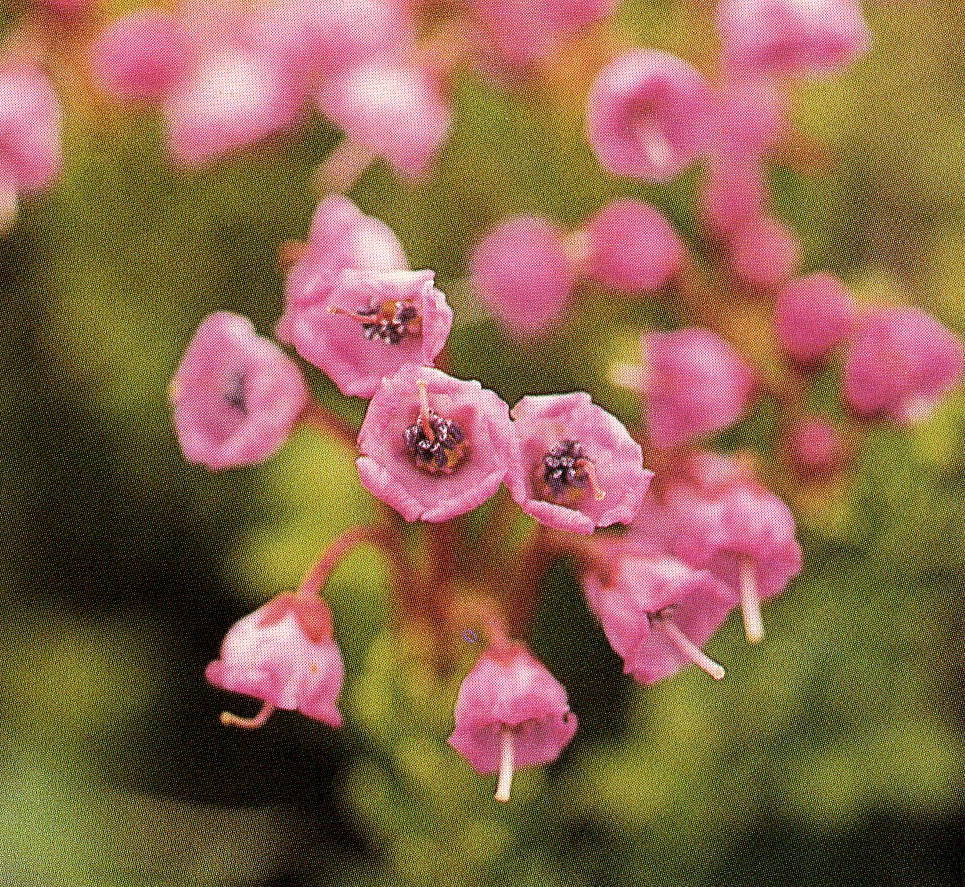
Mountain Heather (Cassiope and Phyllodoce spp.) is a hardy, low-growing alpine shrub that grows on rocky ridges and in alpine tundra and areas near glacial lakes. Its tiny, bell-shaped flowers—either white or pink—add pops of color to some of the harshest landscapes in the high country. Blooming in late summer, it is often one of the few species still flowering at high elevations when most others have faded. Since its growth pattern forms thick ground cover, Mountain Heather helps retain soil moisture and prevent erosion on fragile alpine slopes.
Mountain Heather is known in regional folklore as a symbol of toughness and resilience, thriving where few other plants can survive. Some traditional herbal salves have incorporated its leaves, although such uses should only be pursued with proper knowledge. Hikers looking to spot Mountain Heather should keep an eye out during high-elevation treks, particularly in areas above the tree line.
Quick-Reference List:
- Bloom time: late summer
- Habitat: alpine tundra, rocky ridges, glacial lake edges
- Ecological role: prevents erosion, retains soil moisture
- Fun fact: symbolizes resilience and toughness in mountain folklore
Mountain Gentian (Gentiana spp. & Frasera speciosa)
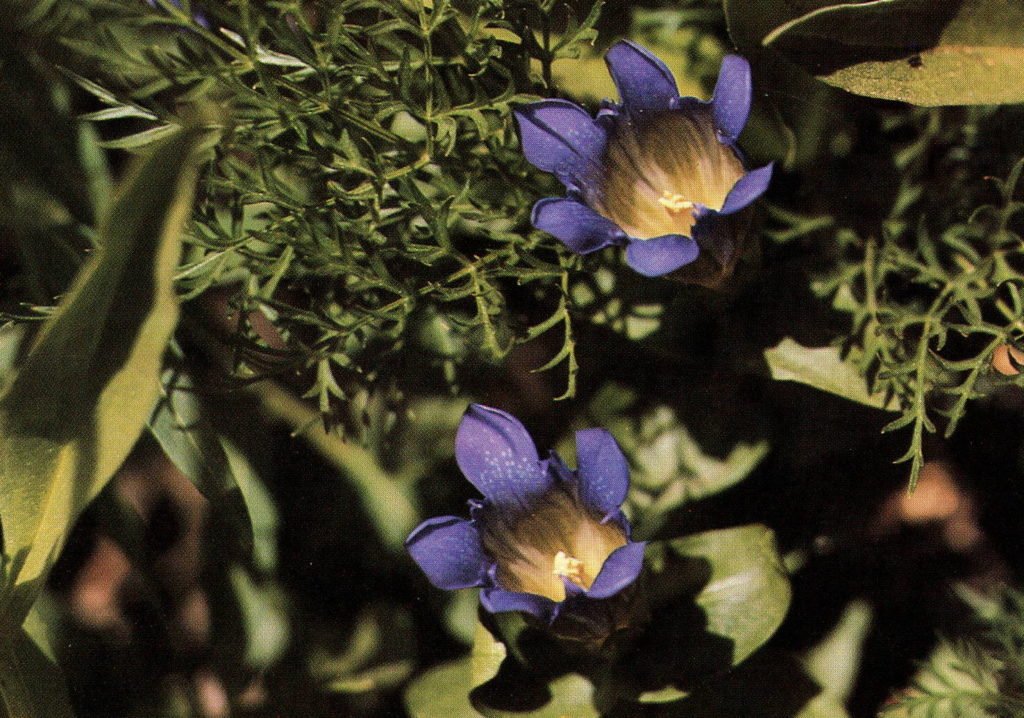
Mountain Gentian (Gentiana spp. & Frasera speciosa) is an alpine wildflower known for its deep-blue, trumpet-shaped blooms that often grow solitary and upright. These blooms typically appear in alpine meadows and forest clearings just before the first snows, marking the tail end of the wildflower season in late summer. One of the flower’s most fascinating traits is that it only opens on sunny days, making it a point of interest for patient plant-watchers and photographers hoping to capture it at full bloom.
Mountain Gentian has long been used in herbal traditions as a bitter tonic, and it continues to be studied today for its potential anti-inflammatory properties. Its roots are the most commonly used part in herbal medicine, and interestingly, bears have been observed digging for these roots in spring—suggesting a possible natural instinct for its medicinal value. Many hikers are drawn to this plant, often asking, “Is mountain gentian medicinal?” The answer is yes, but like many alpine species, its uses are best approached with knowledge and care.
Quick-Reference List:
- Bloom time: late summer (just before first snow)
- Habitat: alpine meadows, forest clearings
- Fun fact: opens only on sunny days
- Uses: bitter tonic; studied for anti-inflammatory properties
Wild Blue Flax (Linum lewisii)
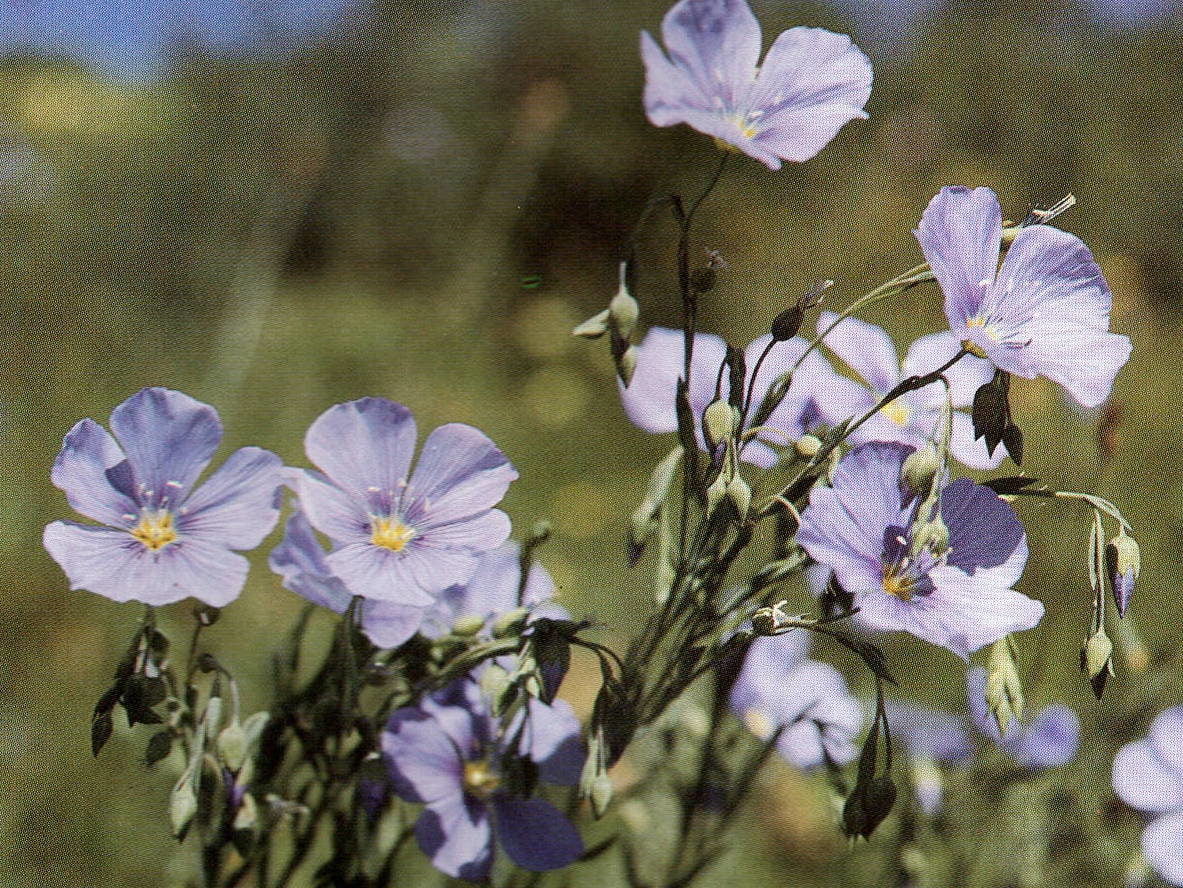
Wild Blue Flax (Linum lewisii) is a graceful native wildflower recognized for its sky-blue, five-petaled flowers that bloom early in the day and often drop by afternoon, giving it a fleeting but memorable presence. Found across dry hillsides, open grasslands and along roadsides, this plant thrives in sunny, well-drained areas and blooms from late spring through fall. Wild Blue Flax can flower for months, although individual blooms last just a single day.
Wild Blue Flax is native to Wyoming and has long been used for its strong fibers and nutrient-rich seeds. Historically, the stalks were used for making cordage in field craft, while the seeds are a source of linseed oil, valued for both nutritional and practical uses. For the best viewing experience, catch it early in the morning when the flowers are open. It’s especially easy to spot along lowland hiking trails, where it grows in loose clusters.
Quick-Reference List:
- Bloom time: late spring through fall
- Habitat: dry hillsides, grasslands, roadsides
- Fun fact: ephemeral bloom style; opens early, petals drop by afternoon
- Uses: linseed oil, fiber for cordage
Elk Thistle (Cirsium scariosum or C. foliosum)
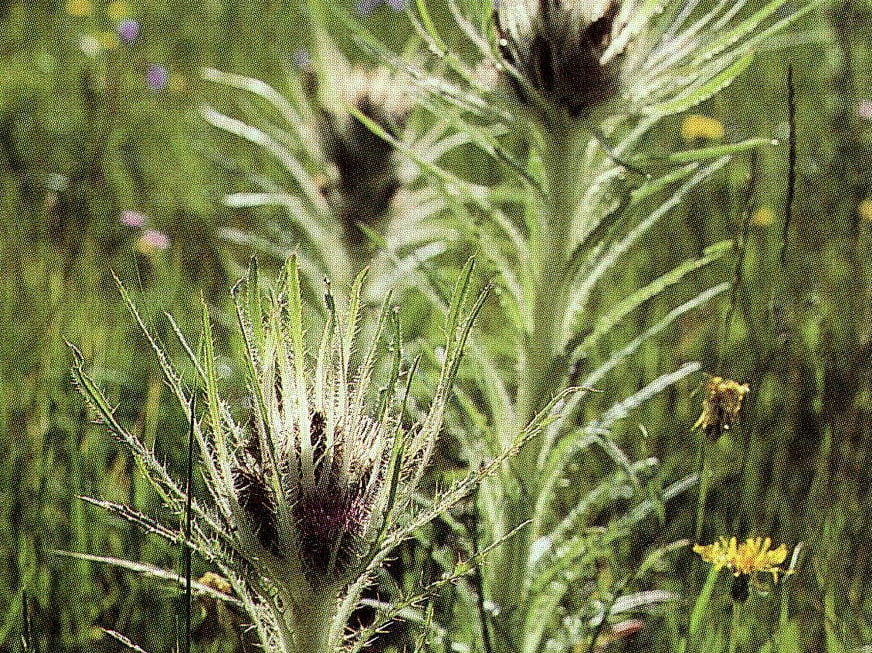
Elk Thistle (Cirsium scariosum or C. foliosum) is a rugged and resilient alpine plant, identifiable by its spiny leaves, purple-pink blooms and rosette base. Commonly found in alpine meadows, gravel ridges and rocky glades, it flourishes in high-elevation areas and blooms from mid to late summer. Despite its intimidating spines, both bears and elk forage on its tender young shoots, particularly in the early growing season before the spines fully develop.
Elk Thistle has a place in early botanical records for usage of its fibrous material, which could be fashioned into cordage or used as tinder for fire-starting. However, it’s best admired from a respectful distance—handling it with bare hands can result in a painful encounter with its sharp spines. Known for thriving in exposed, wind-swept areas, Elk Thistle stands as a symbol of alpine persistence, embodying strength and adaptation in some of the region’s most unforgiving terrain.
Quick-Reference List:
- Bloom time: mid to late summer
- Habitat: alpine meadows, gravel ridges, rocky glades
- Uses: fiber, fire-starting material
- Fun fact: symbolizes persistence in harsh alpine environments
Where to See Wildflowers in Wind River Country
Wind River Country is one of the best places to view Wyoming wildflowers. It offers a vibrant array of Wyoming native flowers from late spring through early fall. Scenic byways such as the drive through Wind River Canyon or the Loop Road near South Pass provide excellent roadside viewing, especially during peak bloom in early summer. Early morning is the best time to view wildflowers, when blooms are most vibrant and lighting is ideal for photography. For a more immersive experience, hiking trails in Sinks Canyon State Park or in the Wind River Range offer access to alpine meadows bursting with color. Many trails are accessible for families, and photographers will appreciate the variety of terrain and backdrops.
Travel Tips for Wildflower Explorers
Exploring wildflowers in Wind River Country is a rewarding experience, but a little preparation goes a long way. Bring plenty of water, wear layered clothing for shifting mountain weather, and stay alert for wildlife, especially in remote areas. Cell service can be limited, so download maps ahead of time, and consider carrying a field guide or plant identification app to help identify Wyoming’s native flowers along the way. Consider pairing your wildflower outing with a visit to a local cultural center or museum for a deeper understanding of the land’s natural and cultural significance. Always pack out what you bring in, stay on marked paths and avoid picking or trampling plants. Respecting these ecosystems ensures Wyoming’s wildflowers continue to thrive for future generations. Whether you’re a casual hiker or an avid botanist, Wind River Country offers unforgettable opportunities to connect with nature at its most colorful.
Frequently Asked Questions (FAQ)
When is the best time to see wildflowers in Wind River Country?
The best time to see wildflowers depends on elevation. Valley blooms begin in April, mid-elevation meadows peak in June and July, and alpine wildflowers appear from late summer into early fall. For vivid colors, visit in the early morning or after a light rain.
Can I hike and see wildflowers without a guide?
Yes, many trails in Wind River Country are open to self-guided hikers and suitable for all experience levels. Areas like Sinks Canyon, the Loop Road and Wind River Canyon offer easy access to wildflower-rich paths.
Are there good spots for wildflower photography?
Absolutely—Wind River Country is a photographer’s dream during wildflower season. Scenic byways, high-elevation meadows and glacial basins offer dramatic backdrops. Early morning light enhances colors and reduces harsh shadows. Bring a macro lens for close-ups or a wide lens for sweeping meadow shots.
Can I pick wildflowers on the Wind River Indian Reservation?
No, picking wildflowers on the Wind River Indian Reservation is not allowed without permission. These lands are culturally and ecologically significant, and respecting tribal regulations helps preserve both native plants and Indigenous stewardship practices. Enjoy the flowers with your eyes and camera, not your hands.
Plan Your Visit to Wind River’s Wildflower Country
Wind River Country offers an unforgettable wildflower experience that changes with each season—inviting hikers, photographers and nature lovers to return again and again. As you explore, remember to tread lightly, follow Leave No Trace principles and respect the cultural significance of tribal lands by staying on designated trails and observing local guidelines. For the best experience, check local tourism or tribal websites for seasonal updates and trail conditions. Whether you’re witnessing the first spring blossoms or late-summer alpine blooms, each visit offers something new and beautiful.
The photos used in this story were originally published by St. Stephens Indian Mission Foundation in VOL. XIX APR/MAY/JUNE 1989 NO. 2. St. Stephens Indian Mission Foundation owns the copyright. More information on the Foundation can be found following the story or by clicking on the link above.
Posted in Pressroom