

Rock art has told stories for thousands of years. While many parts of the world have ancient formations and structures built by the first inhabitants, such as pyramids and temples, the first people in Wind River Country also left behind remnants of their existence. There are over 200 known sites of rock art and petroglyphs in Wyoming, and many of them can be found on the Wind River Indian Reservation and throughout the Wind River Valley. Historians believe Native Americans used rock art to record events, mark important locations and simply express creativity. The fact that no one knows the exact significance of these images makes them even more intriguing.

Just a few miles outside of Dubois sits the Torrey Creek Valley. Archaeologists have found several prehistoric campsites and petroglyph sites near Torrey Lake, Ring Lake and Trail Lake. The rock art surrounding these lakes consists of four-legged animals, figures with hands and feet and masked beings. The Torrey Lake Petroglyph District extends for roughly three miles and includes about 175 petroglyphs. Unlike many petroglyph sites on faces of cliffs, the petroglyphs found in Torrey Valley are carved into sandstone boulders that broke away from the cliffs above.

Dinwoody Lake is in the lower part of Dinwoody Canyon, located a couple miles southeast of Torrey Valley. This area is one of the main watersheds of the Dinwoody glaciers, which are located on Gannett Peak’s eastern face. It is believed that the Dinwoody area was most likely a permanent location for Native American villages due to the constant supply of pure water, abundant wildlife and available fish year round. The cliffs bordering the valley provided protection from wind and snow.
It is on these red cliffs, located on the northern shore of the upper lake, where one of the greatest collection of petroglyphs in the state can be found. The petroglyphs on these cliffs display numerous figures of complex design. Some of the petroglyphs resemble animals such as deer, elk, mountain sheep and goats, while others resemble a wide variety of human figures. The rock art on these panels range from approximately six inches to seven feet in height. The stunning petroglyphs of Torrey and Dinwoody basins can be viewed by contacting the Dubois Museum.

The Castle Gardens Petroglyph Site is located approximately 45 miles east of Riverton. The road winds through vast prairie and desert terrain, leading to a large outcropping of stark white sandstone which the wind has eroded into whimsical shapes resembling the towers of a castle. The brilliant white towers and cliffs range from 10 to 100 feet tall. These unique rock formations have attracted visitors for thousands of years, and many of them left their mark in the soft sandstone.
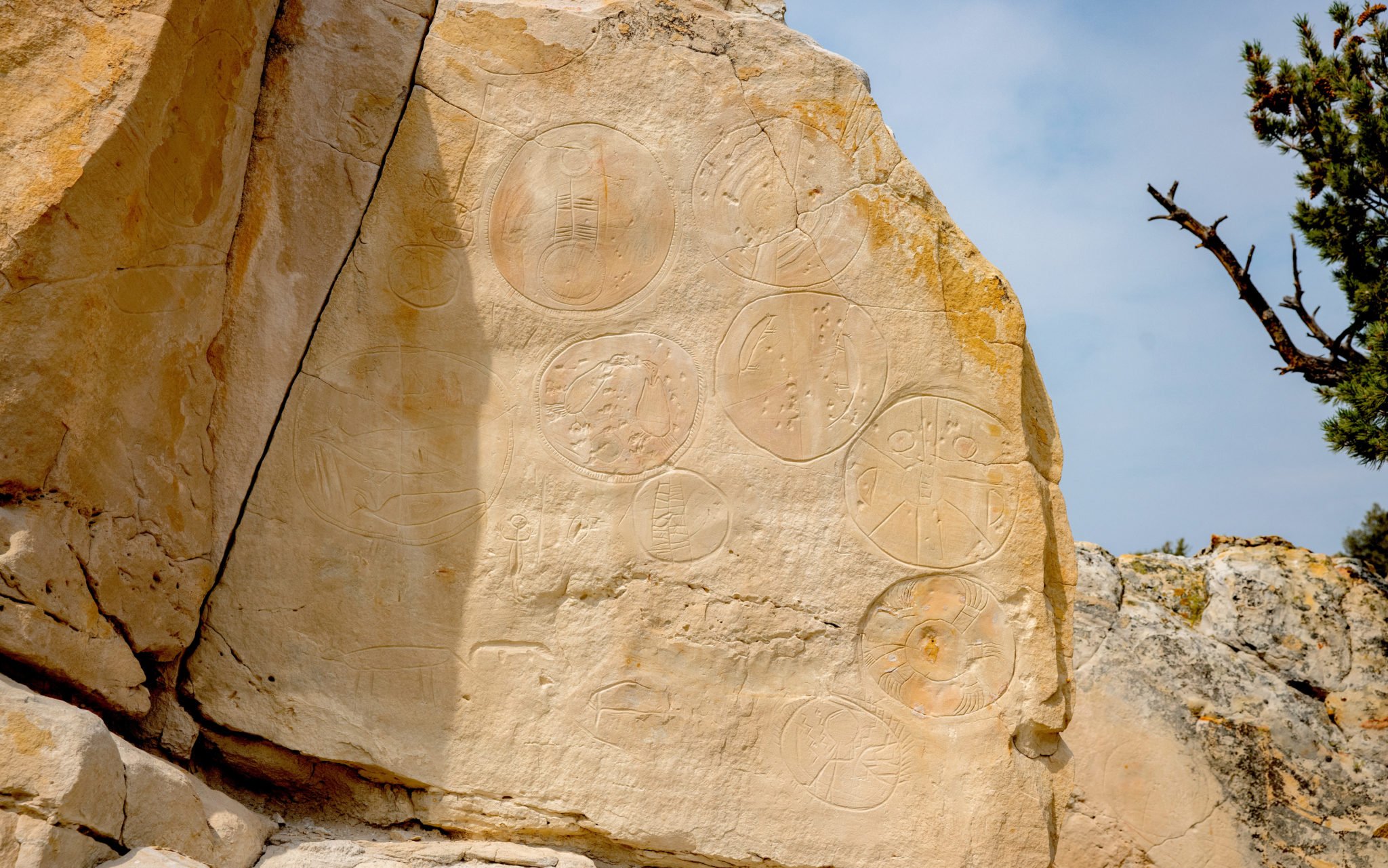
The most famous style of petroglyphs in the area is known as the Castle Gardens Shield Style, the oldest recognizable example of the shield-bearing warrior figure type. The shield style figures are circular engravings, all roughly the same size with different interior designs of geometric shapes and animal forms. After these shields were etched into the white stone, they were painted with pigment made from local minerals leaving traces of color that can still be seen today. There are other petroglyphs scattered throughout Castle Gardens as well. Figures resemble hunters, warriors, medicine men and animals from turtles to buffalo to birds.

Petroglyphs are powerful cultural symbols that represent the lives of the Native Americans that lived in this area thousands of years ago. Seeing such art can be a magical experience, but please be respectful of the history of these figures. Petroglyphs are very delicate and once destroyed, can never be replaced.
Please help follow these simple guidelines to help preserve this rock art for years and years to come:
- Look and observe, but do not touch. Even the smallest amount of oils from hands can ruin the images.
- Stay on the trail and do not climb the rocks around the petroglyphs. Falling rocks can hurt other people, as well as cause damages to the petroglyph boulders.
- Keep all dogs on leashes in areas where they are allowed.
- Photography and sketching are allowed, where permitted.
It is believed that each of these petroglyphs are not randomly placed and that each figure of rock art has a significant meaning. When viewing these historical pieces of art, remember the importance to both past and present cultures and take a step back to appreciate the hard work and thought that was put into each one.