



By Casey Adams
As young girl, I used to drag my sleeping bag out the back yard and stretch out in the yard, watching the stars next to my mom, dad, and little sister until we wee ones fell asleep. Nestled up against the Wind River Mountains, we watched meteor showers, made up constellations, waved at the occasional jet as it blinked at us from miles above but never attempted to count the threads in the blanket of stars. These are fond memories.
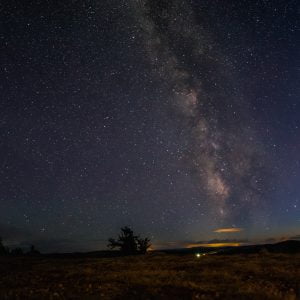
My most surprising memory of the Milk Way was in college, when I brought a friend home for a vacation. We drove all day, parking in my parents’ driveway late in the evening. I shut the car door and headed for the house. But she stood still in the darkness, gazing upward.
“Is that the Milky Way?” asked my 21-year-old friend. Twenty-one years and she’d never seen a night sky like that—one I’d taken for granted for almost as many years.
Though I draw my sleeping bag onto the lawn less often now, as things like careers and alarm clocks force a certain awareness of the time that we never had as children, I no longer take those billion-star nights for granted.
We learned this year that one third of the global population, 80 percent of Americans, and even more Western Europeans cannot see the Milky Way. Furthermore, entire generations have never seen the
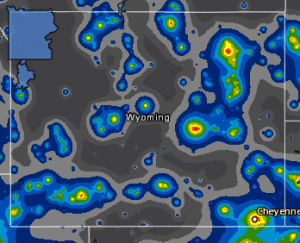
Milky Way. Not gone more than 20 years without seeing it—never, ever seen it. I mourned a little for each of those people who don’t have the same memories of feeling the awe, the perspective that a sparklingly full, unending night sky bestows upon us wee beings.
However, we also learned that there are some bright spots (dark spots!) in the story. For example, national parks are often light-pollution havens. Places like Yellowstone National Park stand out on maps as un-encroached, natural settings.
Upon looking at this new artificial light map, the color-coded region reaching out from Yellowstone’s southern and western boundaries stood out to me as equally dark and welcoming—my home, Wyoming’s Wind River Country.
“From May until the end of August, we’ve got the best Milky Way in the country,” says acclaimed Riverton photographer Jim Brown. “I mean, it’s just absolutely gorgeous here. The colors and the textures that the Milky Way gives you here is the best.”
Lack of light pollution. Stunning Milky Way presence. Wide-open spaces with easy access. Clear summer skies. Altitude to minimize the obstruction of atmosphere—ranging from about 5,000 feet to 13,000 feet in elevation.
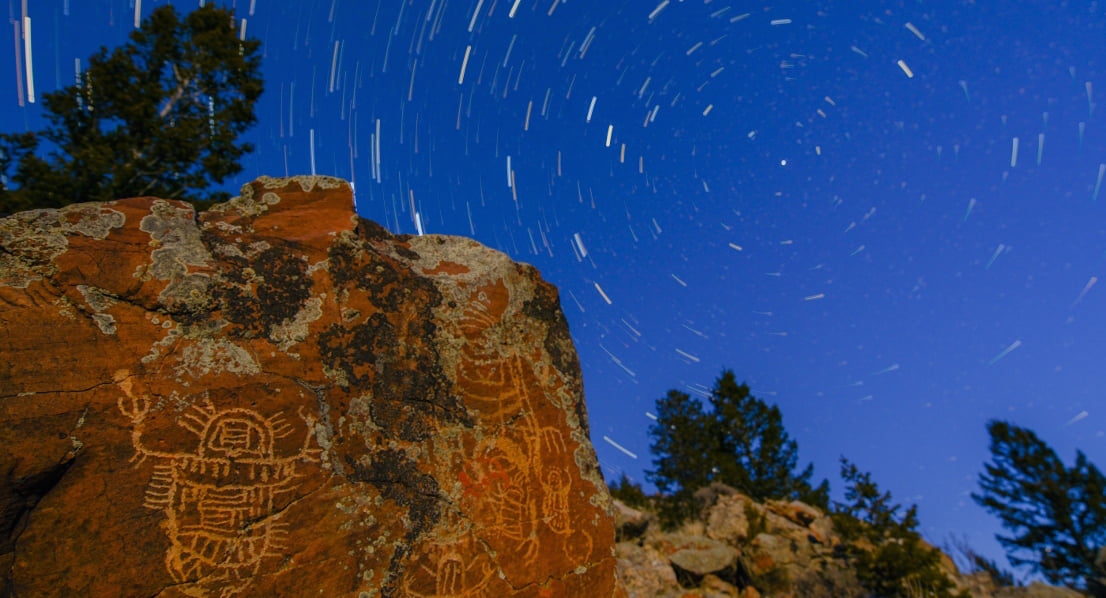
It’s not difficult to find a place from which to stargaze in Wind River County. It takes little more effort than dragging your sleeping bag out of the tent or pulling a blanket from the cabin bed to the porch. But if you do find yourself spending the night in town or in need of some celestial edification, here are a few places that are easy to access, provide interesting foreground for your photography, and are dark enough for you to take in the full beauty of the night skies.
Learn more about stargazing in Wind River Country and find a list of events and recommended viewing locations here.
Be prepared when you venture into the night: scout the location in daylight first, tell someone where you’re going and when you expect to return, pack more warm clothes than you think you’ll need, bring a flashlight, bring some snacks and water, pack bear spray (depending on the time of year).